Who Wrote Madison’s Office of the Independent Police Monitor Annual Report?
Scrubbed from the Internet: the Office of the Independent Police Monitor | City of Madison | 2025–2026 Annual Report.
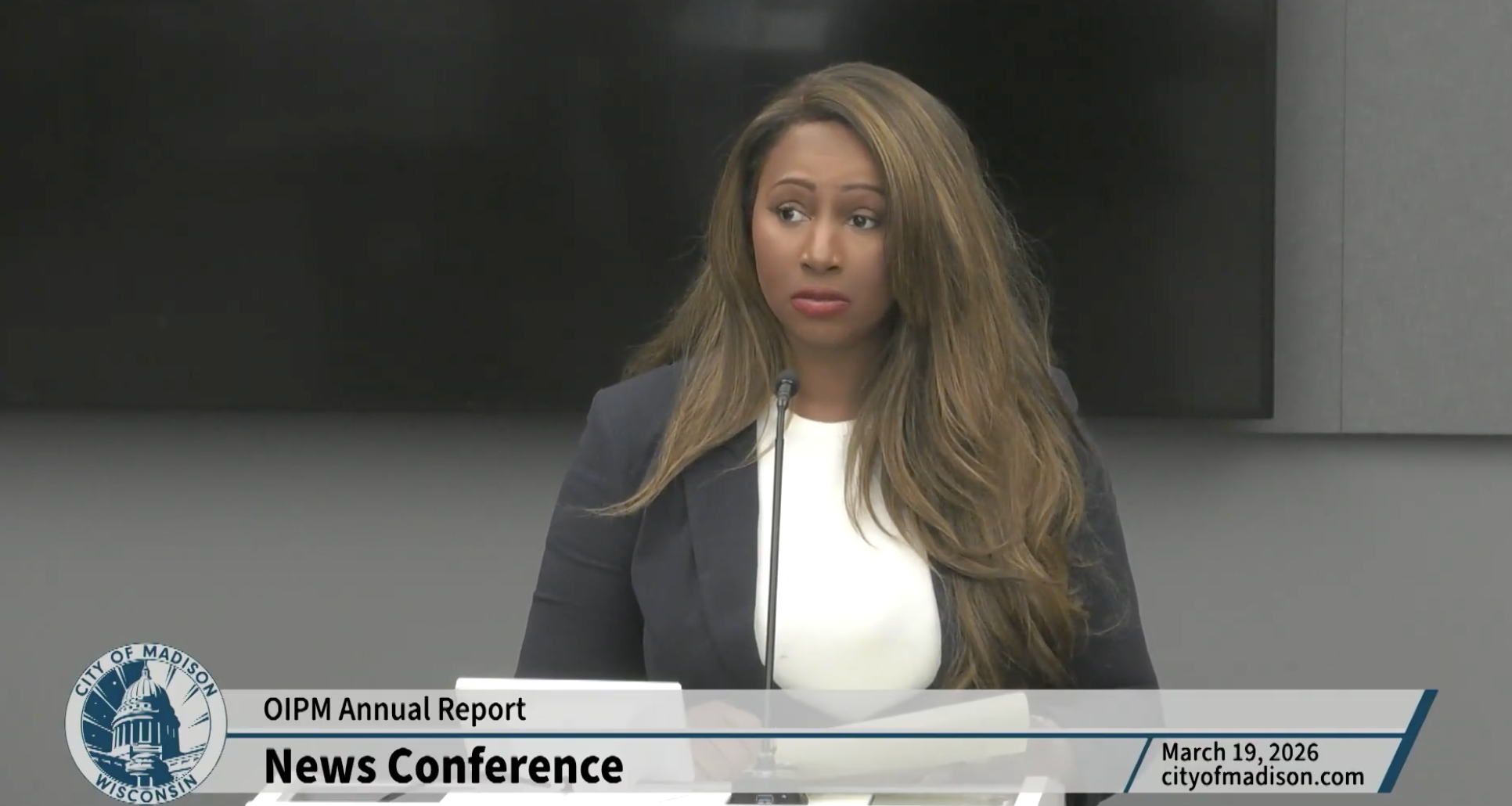
Aeiramique Glass ⎪News Conference ⎪March 19, 2026
Glass responds to criticism over the OIPM’s use of AI in an annual report focused on police oversight and accountability.
Opinion Piece + Public Record ⎪ Public Inquiry Project
Published by Storm Syndicate LLC
The City of Madison has pulled the 2025–2026 Annual Report created by the Office of the Independent Police Monitor (OIPM) due to public questioning and criticism of a report that appeared to be heavily created by Artificial Intelligence (AI). AI cannot be held accountable in the same way a human author can. In a report centered on ethics and oversight, authorship and transparency matter. How a report is created matters. It really does. Public trust depends on ethical and moral behavior from both the systems at play and their oversight.
Luckily, Public Inquiry Project (PIP) downloaded the report, which is located at the end of this article.
The OIPM is currently being run by an Interim Independent Monitor, Aeiramique “Meeka” Glass, who was appointed after prior scandals and seeming ineptitude within the OIPM’s office led to the resignation of Robin Copley. Glass raises valid arguments and important questions that need to be answered. She is correct that there is a significant problem with arrest rates disproportionately impacting the Black community in Madison. There is also a clear disparity in arrests involving the unhoused population.
Socioeconomic segregation has taken hold in Madison and Dane County, an issue the left often downplays and the right reduces to partisan talking points.
Identifying disparities is not the end goal. It is a step in the process. Much of the response and recommendations made by Glass focus on police response. This means we are changing only the reaction after harm has already occurred. Real solutions need preventative investment. How do we prevent our communities from reaching this point in the first place?
It requires strong schools, stable communities, and environments where people are given a fair shot long before law enforcement becomes involved. If our communities fail, we should not be surprised when the outcomes reflect that failure. Children are products of their environment. We must understand that our community as a whole is their environment. We need to build an environment where people care about each other, and recognize that what happens to one person affects us all.
If the only solutions offered begin after someone has already entered the system, then the system itself remains unchanged. To quote Audre Lorde, “The Master’s Tools Will Never Dismantle the Master’s House.” This is still true here.
Left or right, Republican or Democrat, both sides are getting this wrong. We can’t ignore this any longer. This is a broader structural issue that continues to grow while both sides point fingers at each other. Like it or not, we are all a part of one larger community. We are all neighbors. What happens here is our responsibility. Ignoring that responsibility is a choice. Will you accept that?
There is a level of accountability that we all must take in life. Whether we meet it is a personal choice. Choosing roles in life that demand higher accountability is also a choice. Glass has built her career on holding others accountable, providing oversight and advisory services to ensure ethical and moral decisions are being made.
So where is that same standard here? How does it apply to Glass? Where is her accountability?
Does it appear in deflecting criticism, or in shifting the focus away from how this report was produced? Does it rest on explanations about limited resources, despite the expectations of the role itself? And how are we meant to trust that the questions raised at the March 19, 2026 press conference reflect her independent analysis, rather than work generated for the office through AI?
Which leads us to:
Is creating an annual report on the ethics of a police department using Artificial Intelligence ethical?
Or are ethics only for other people, not Glass nor the office of the OIPM?
PIP has researched who Glass is, and what she stands for. She appears to be a genuinely committed person trying to improve a system that resists change. She has a strong record of advocating for equity in communities that need it. She often speaks about difficult concepts and issues her work brings to the surface, and calls on people to sit with that discomfort.
We hope she uses this experience to reflect on what happened and why it matters. Her press conference today felt like she may have missed that point. Accountability requires that kind of reflection, even when it is uncomfortable, and even for those who are usually the ones holding others accountable.
PIP will continue to bring coverage about what has happened and what has not, with the OIPM, the City of Madison, and the Madison Police Department.
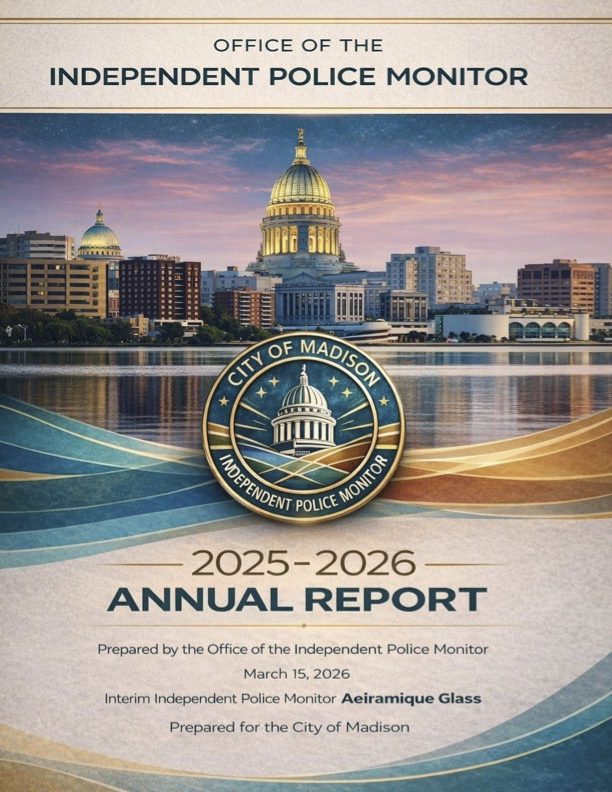
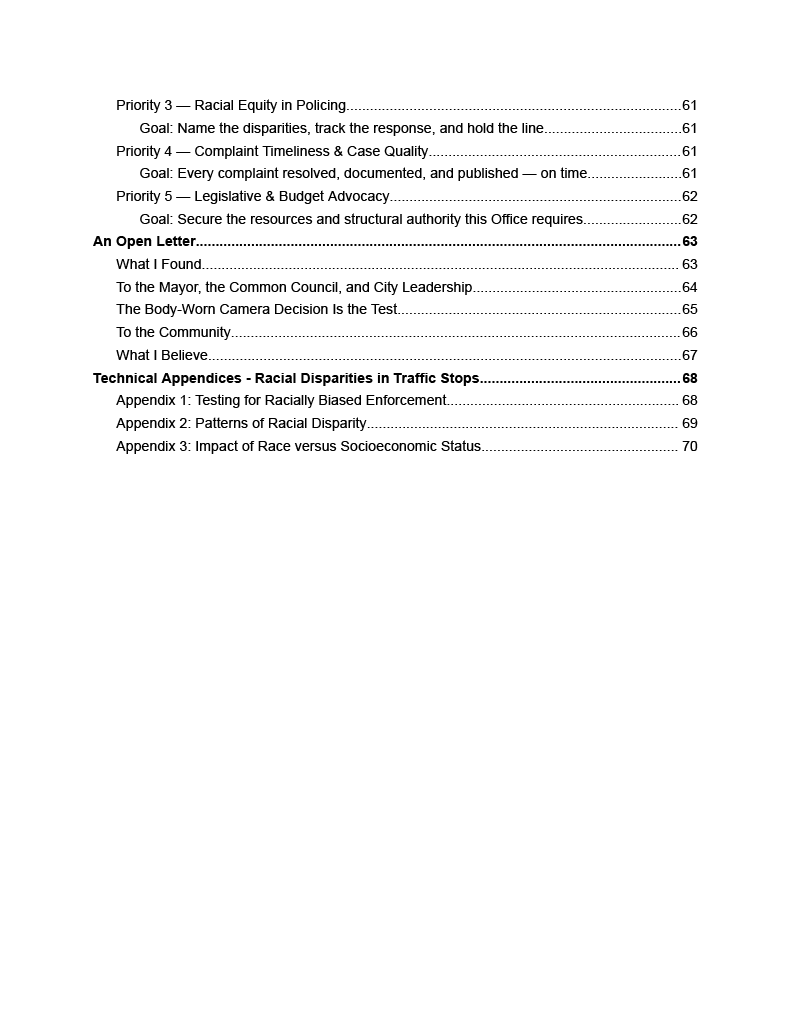
Table of Contents
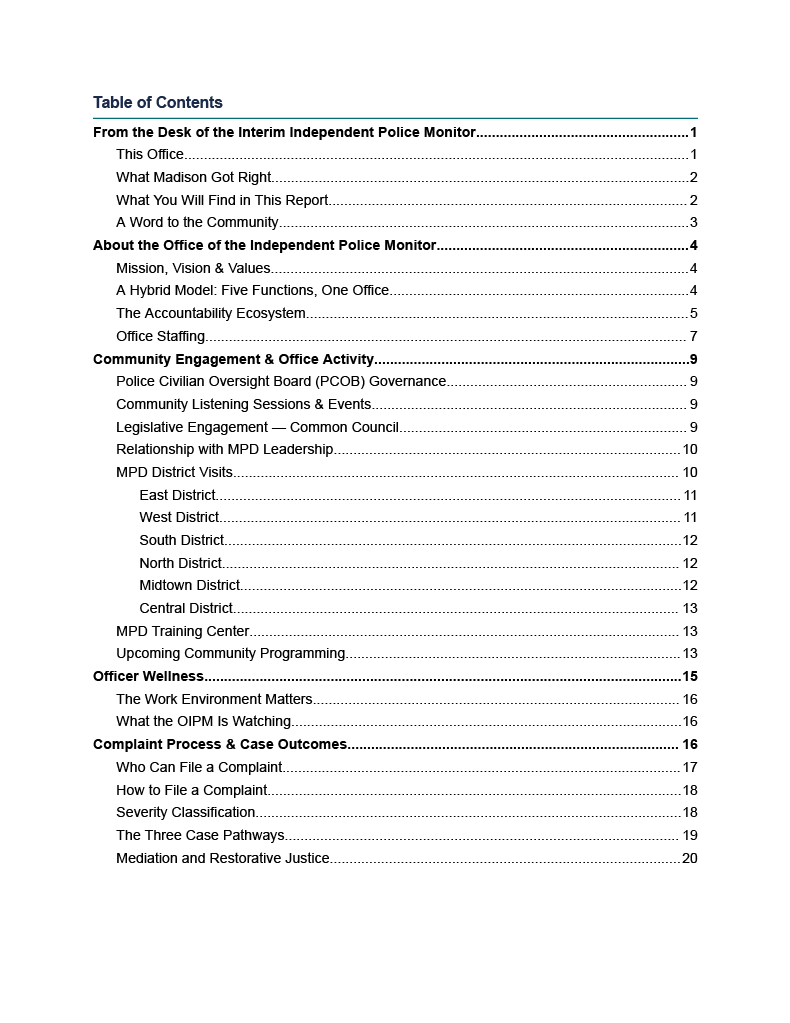
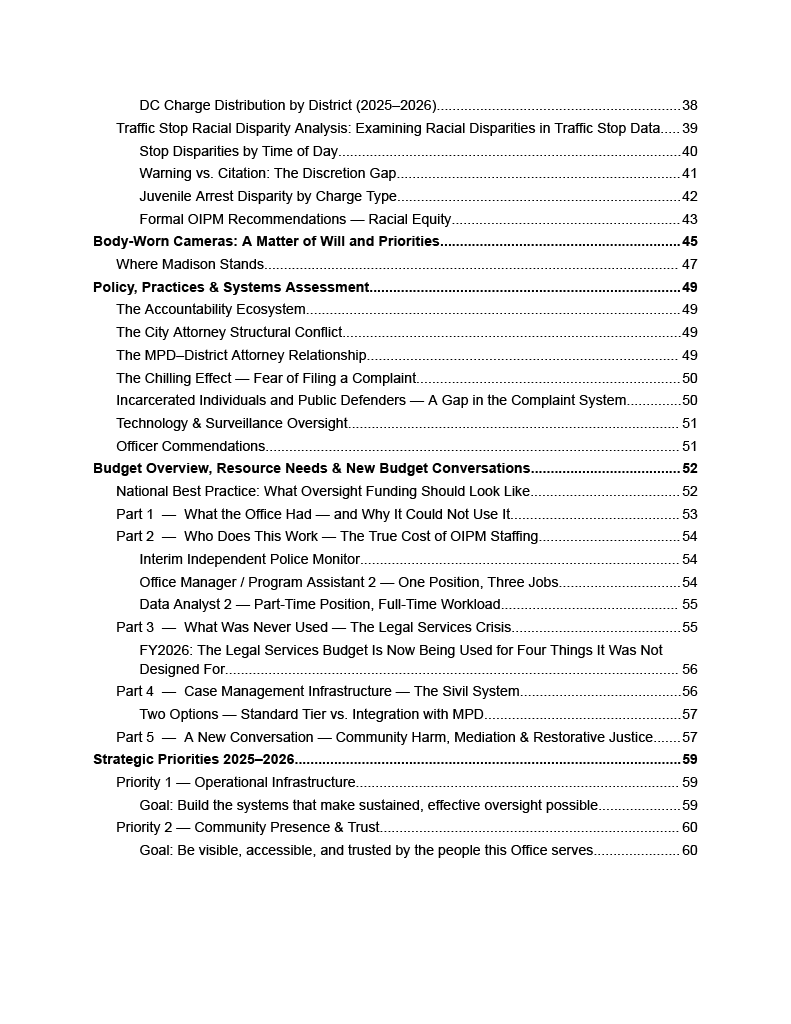
Opening Letter by Aeiramique Glass
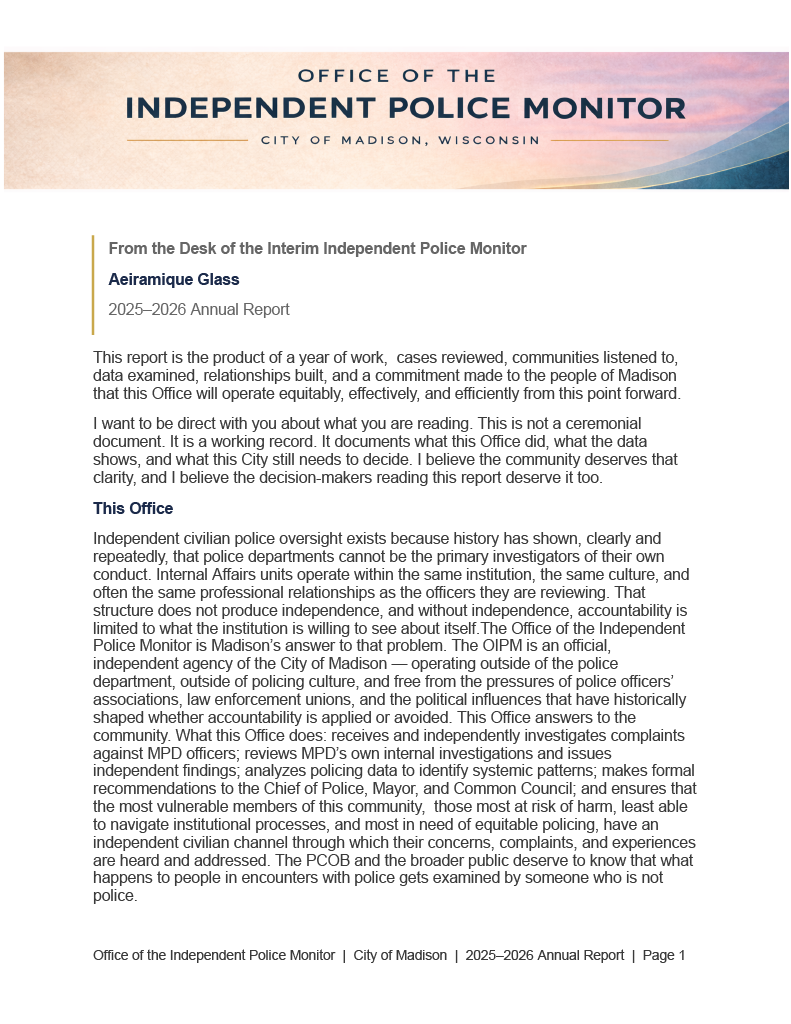
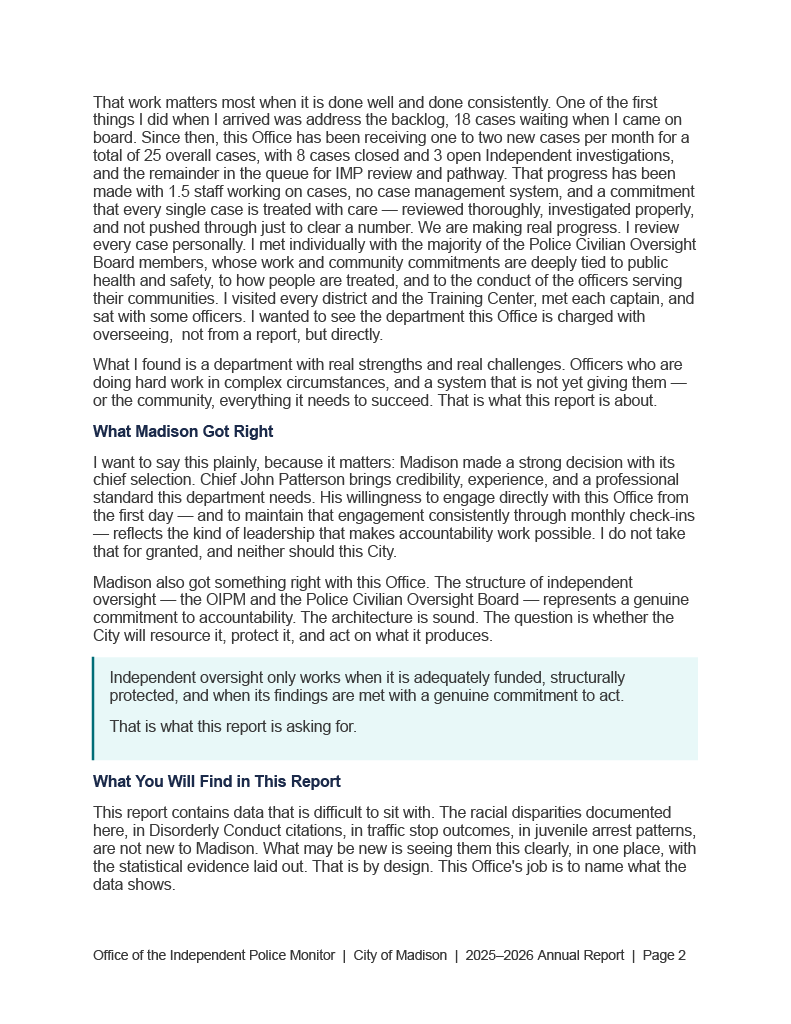
About the Office of the Independent Police Monitor
Community Engagement & Office Activity
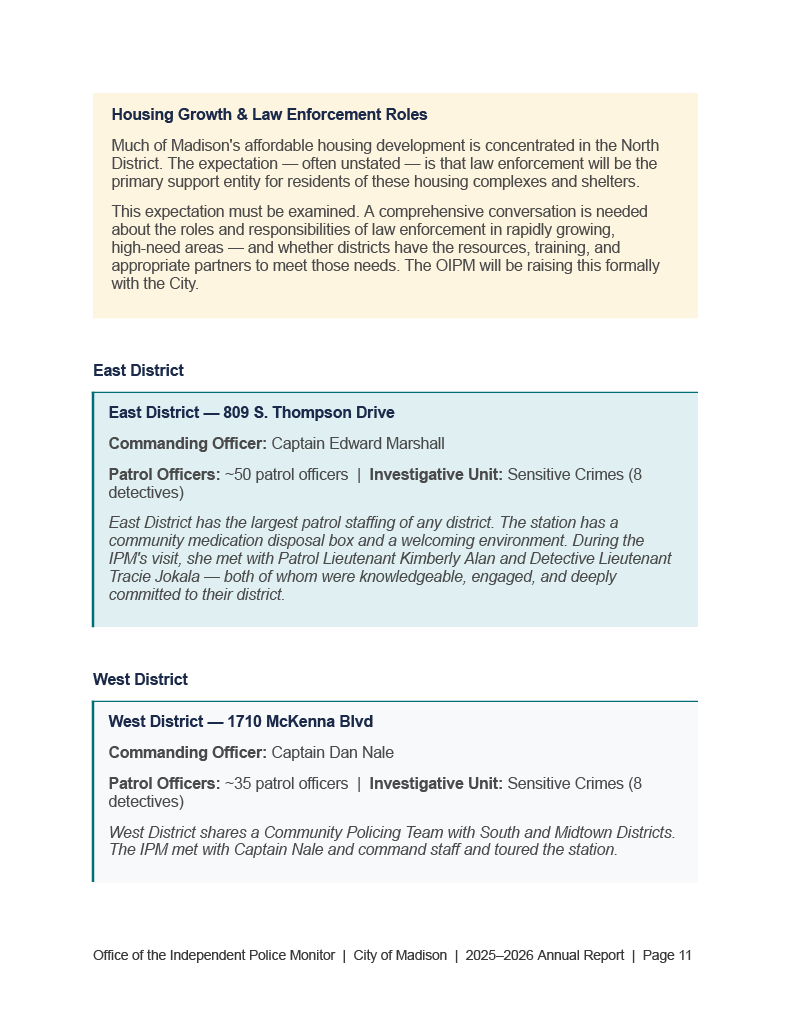
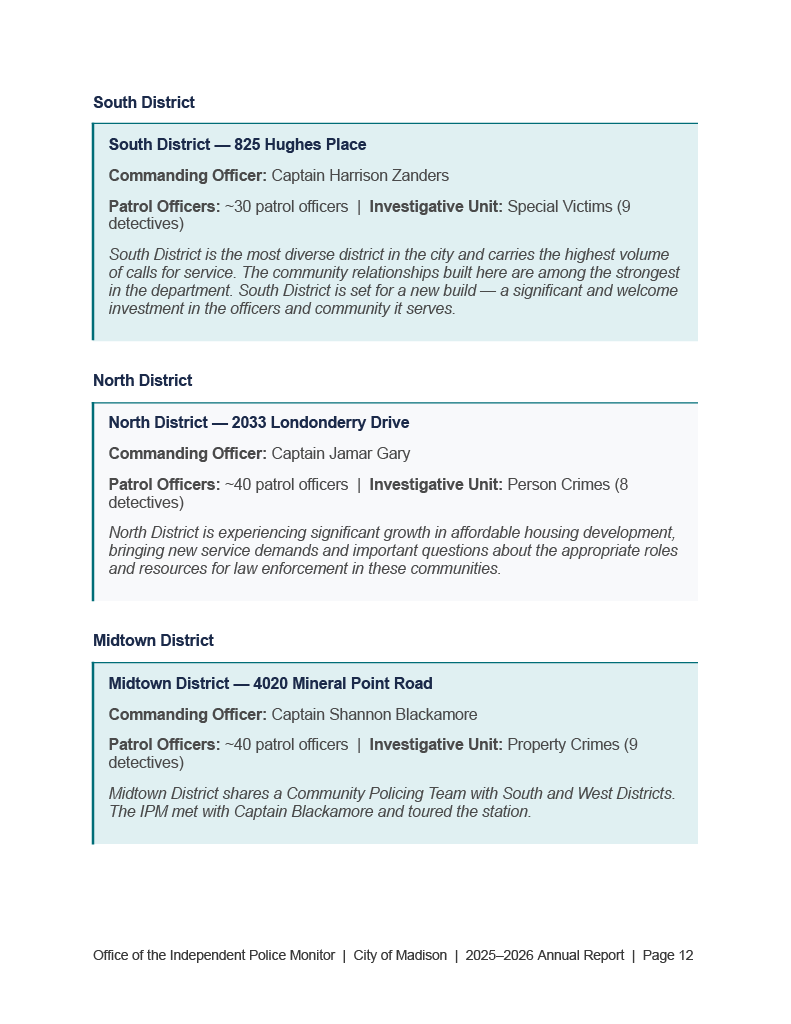
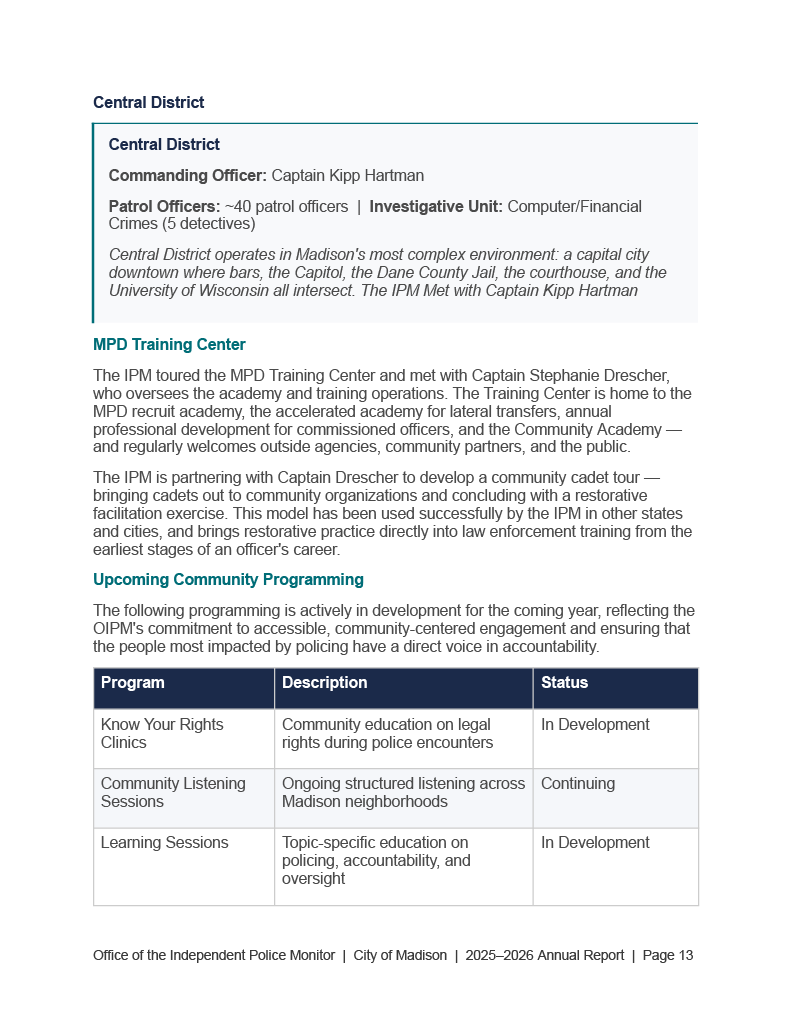
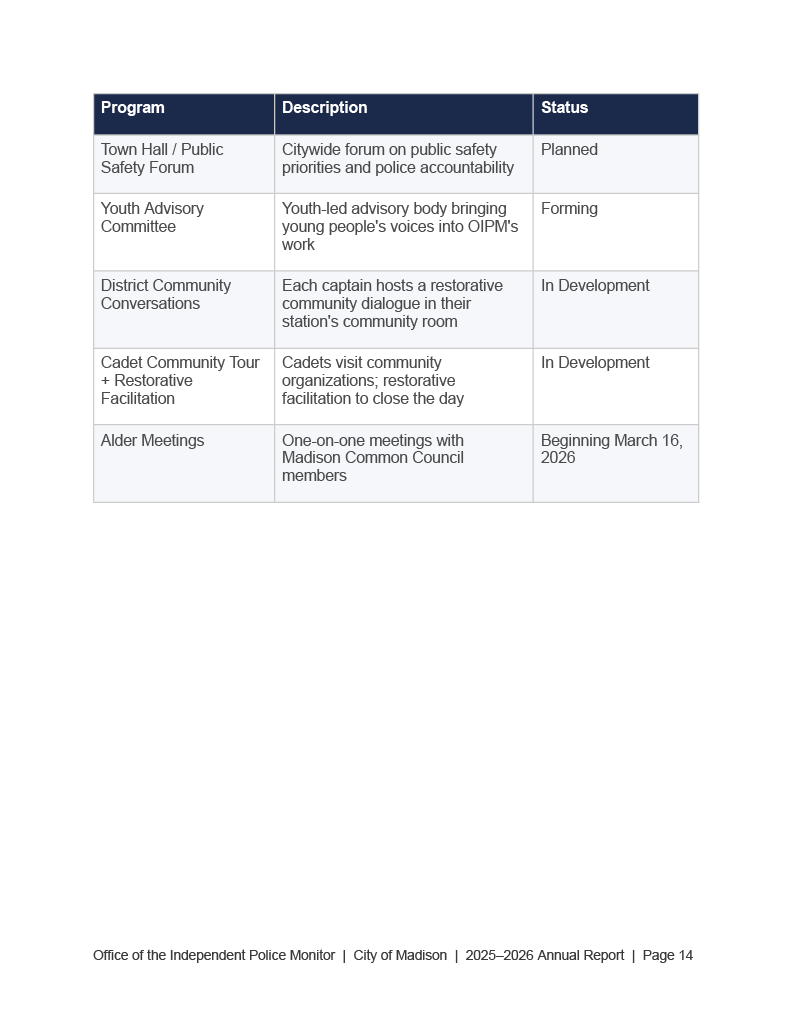
Officer Wellness

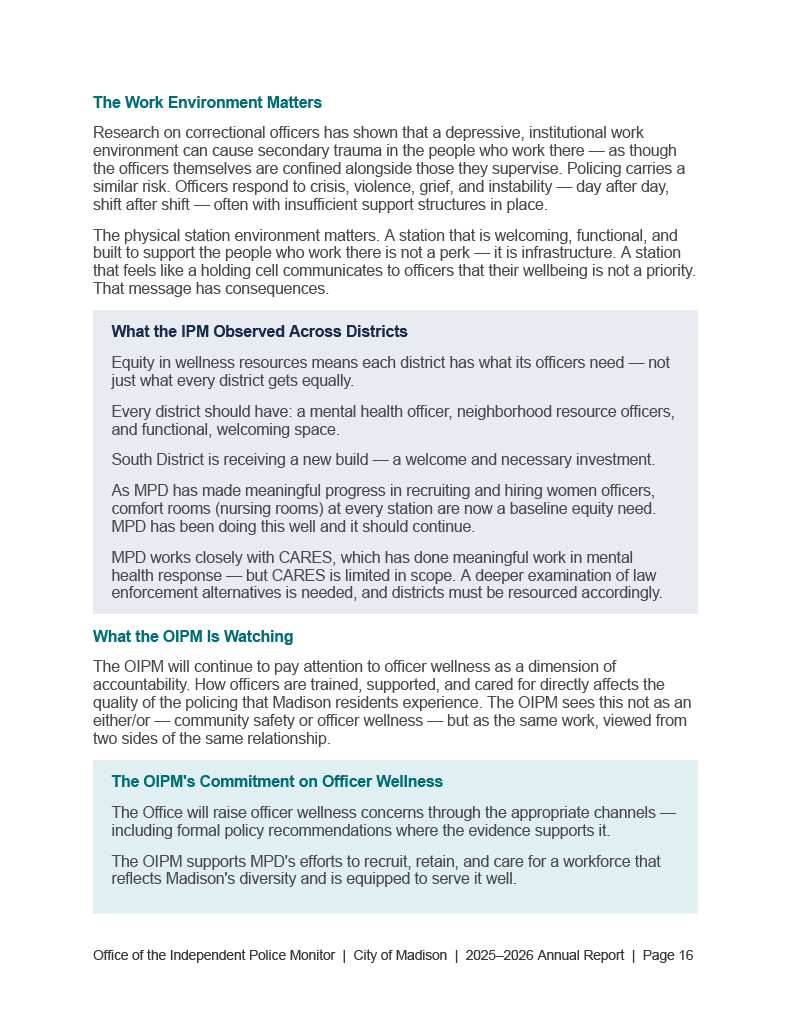
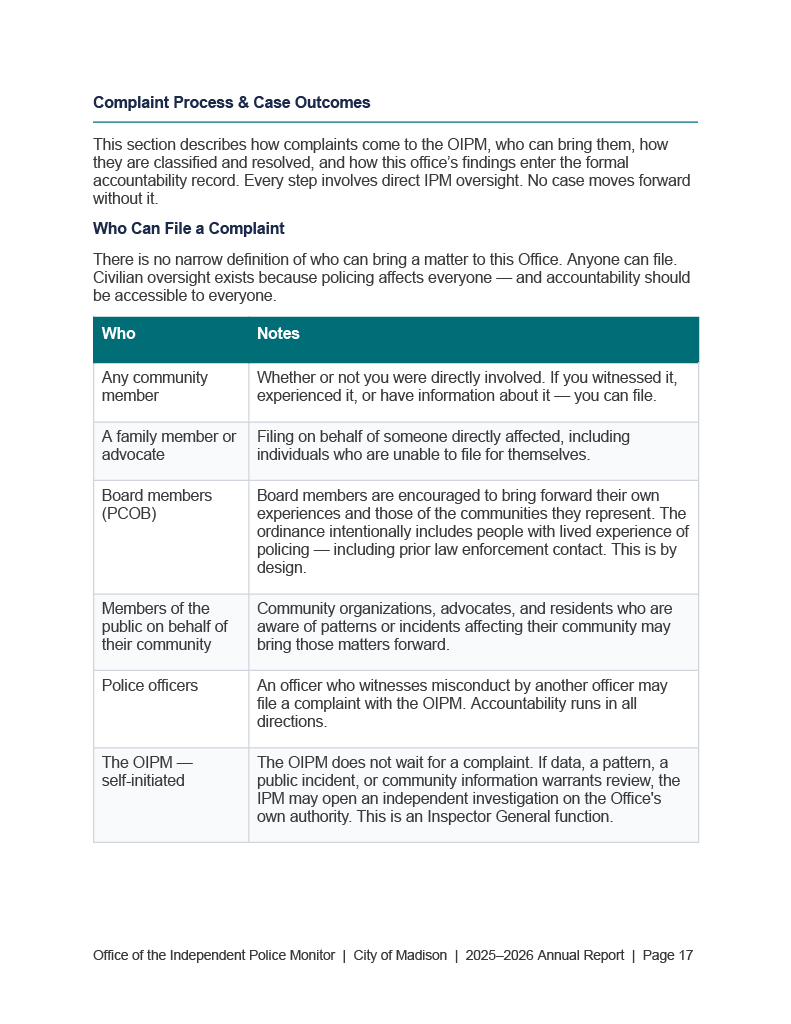
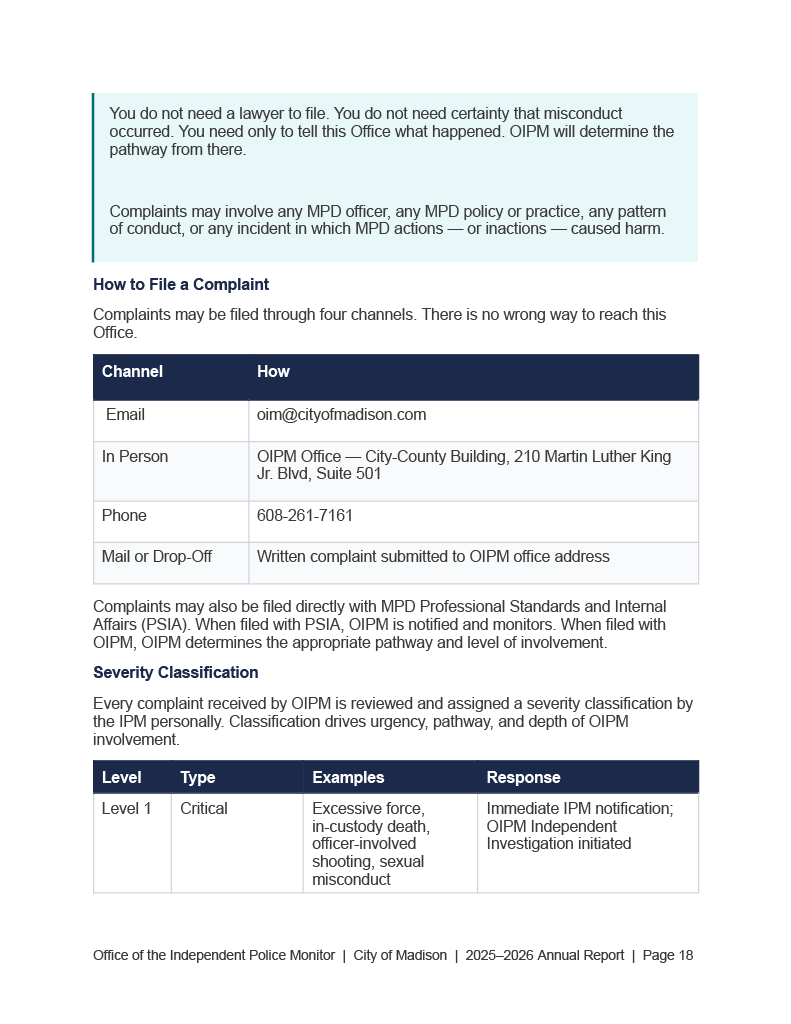
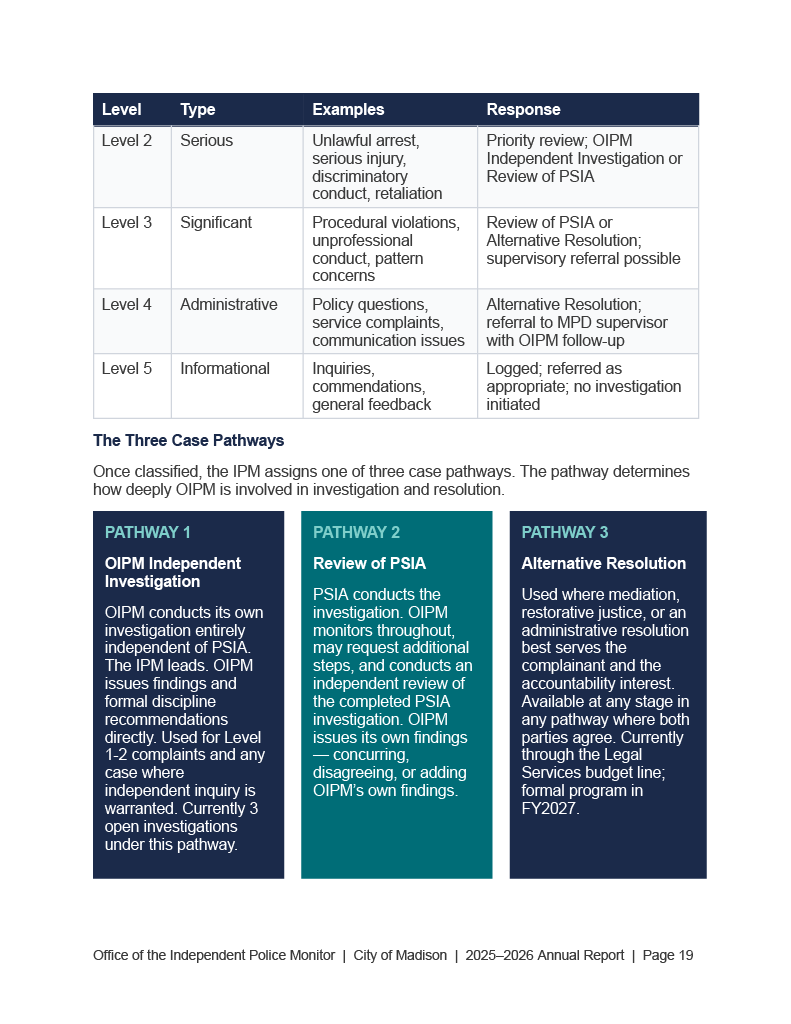
Complaint Process & Case Outcomes
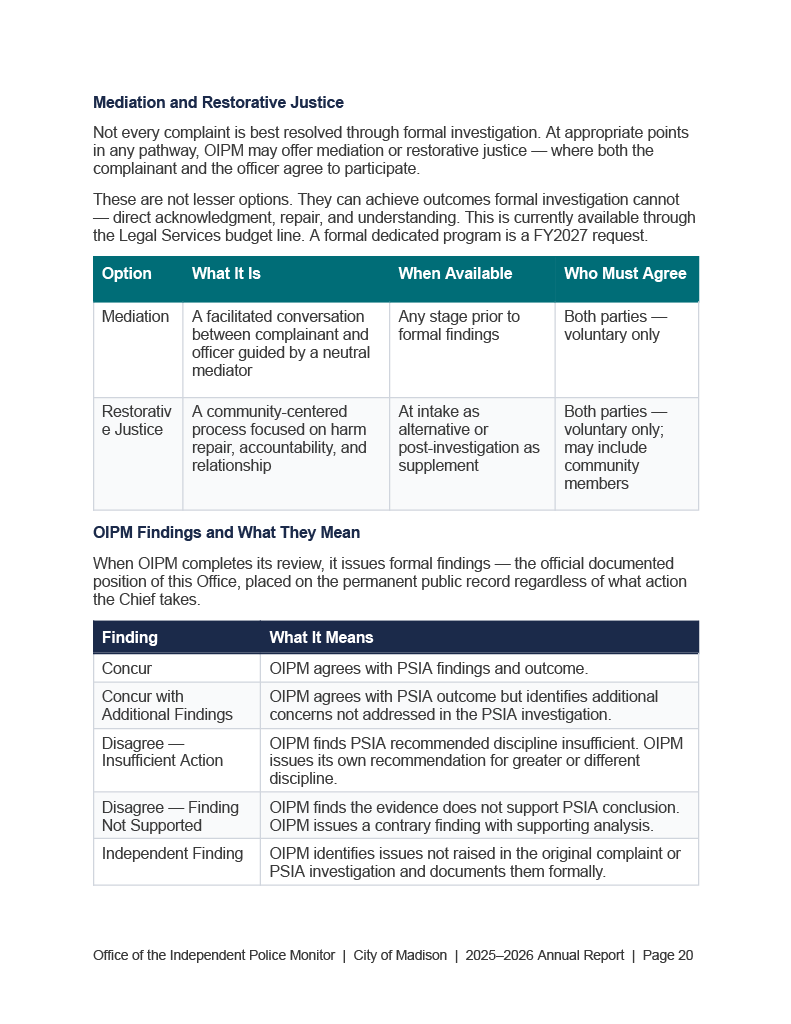
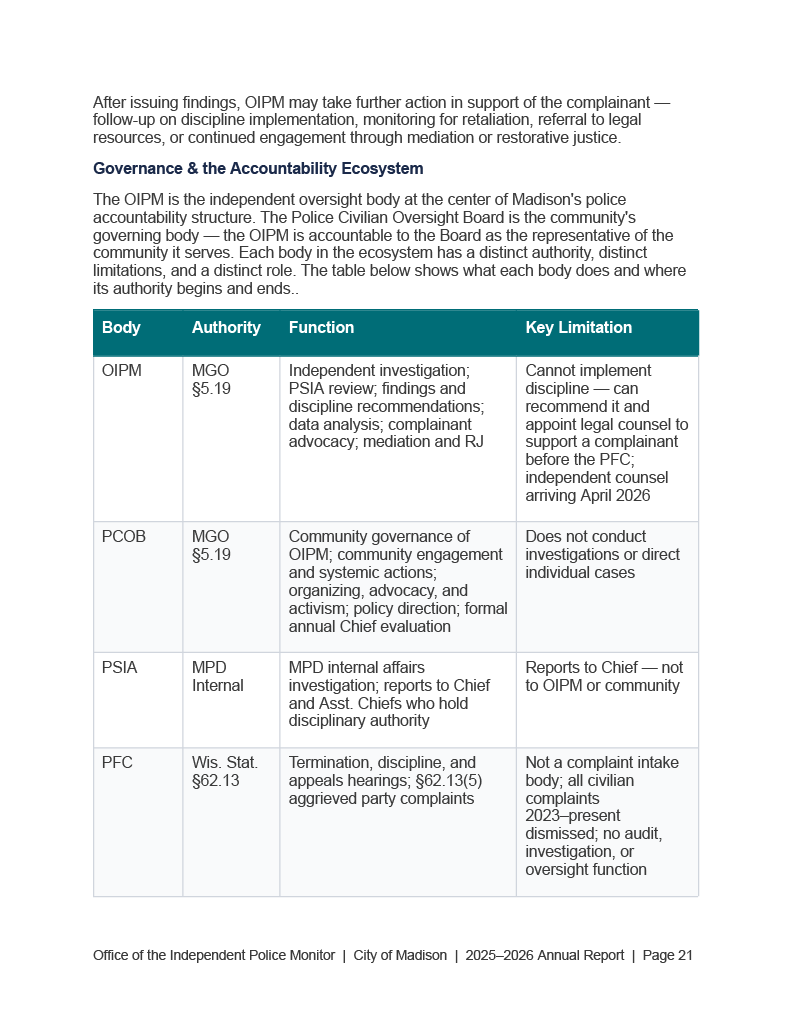
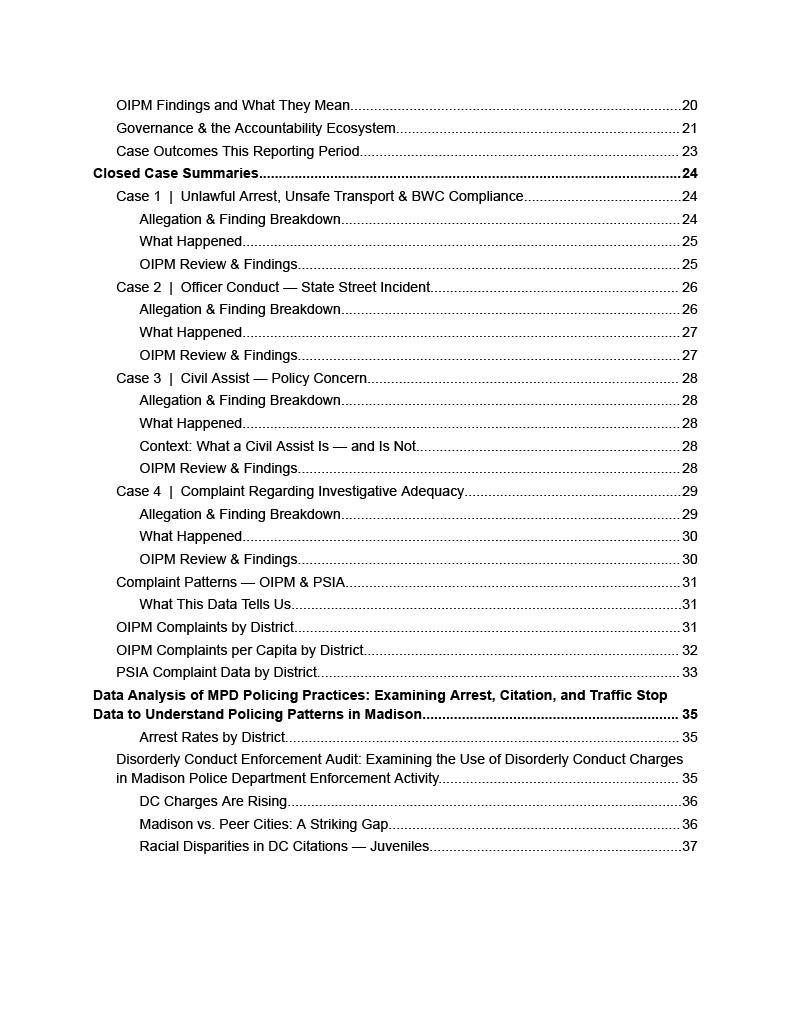
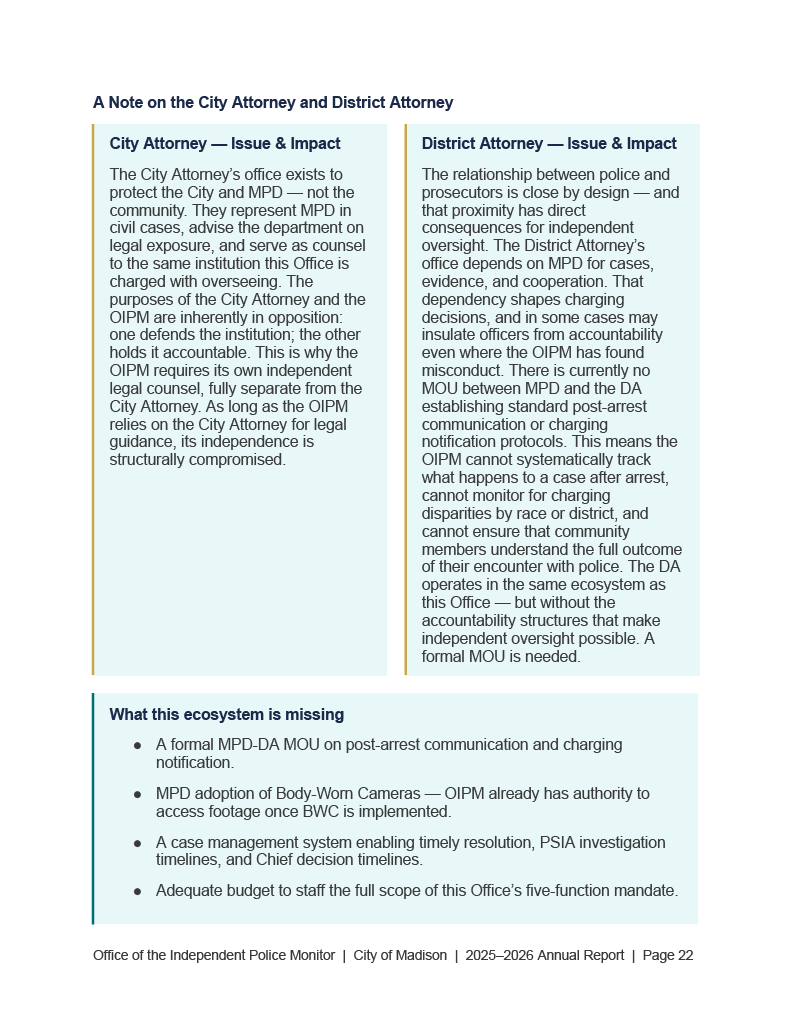
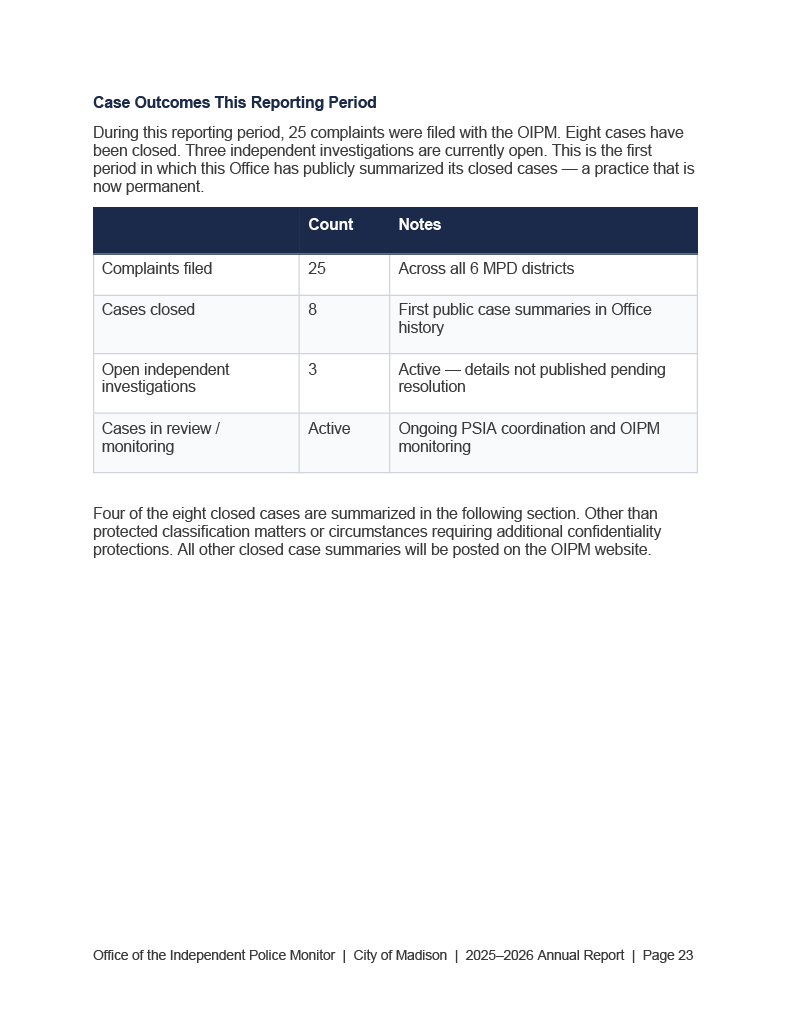
A Note on the City Attorney and District Attorney & Case Outcomes This Reporting Period
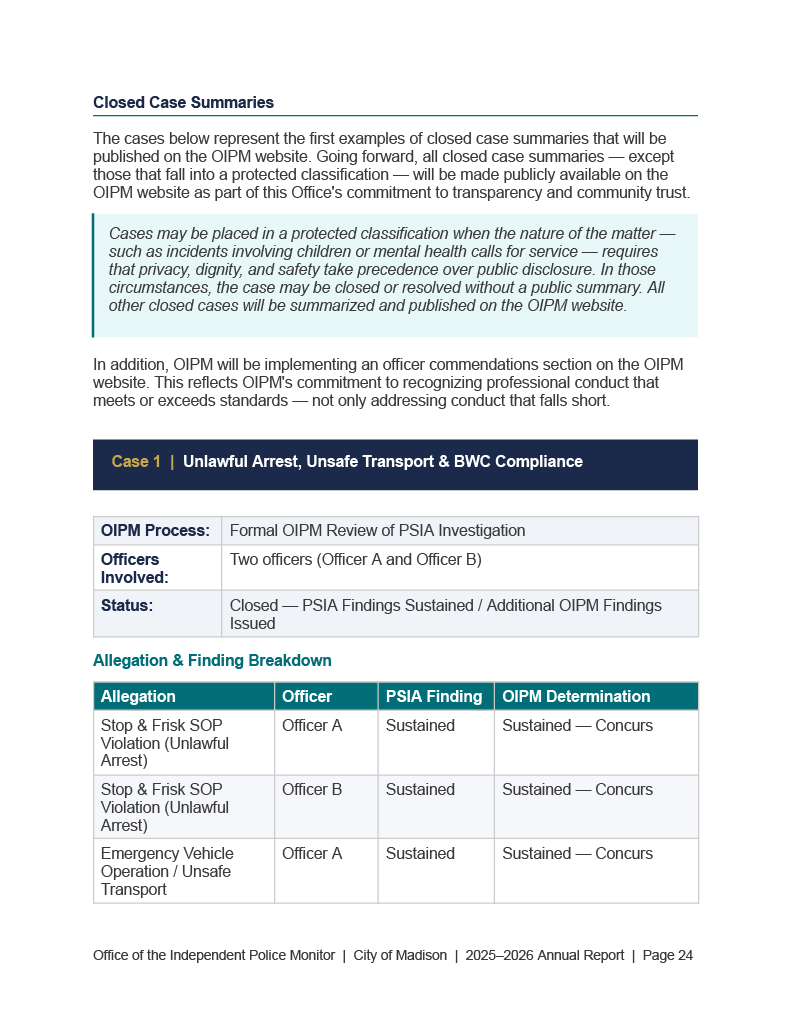
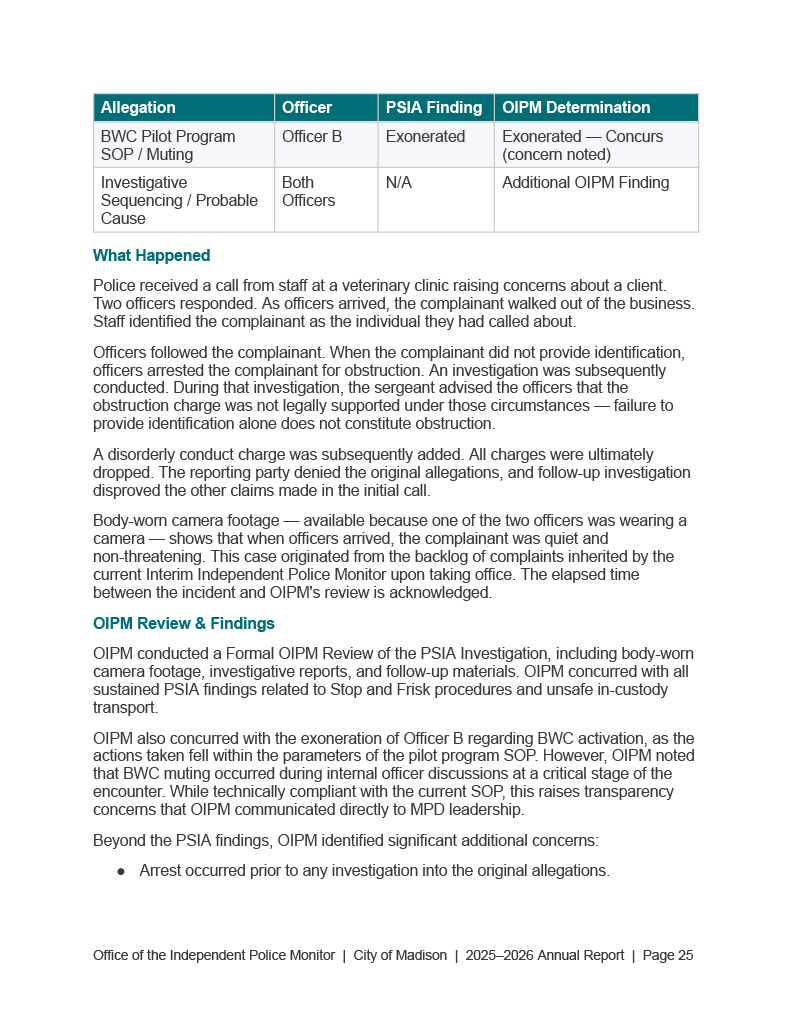
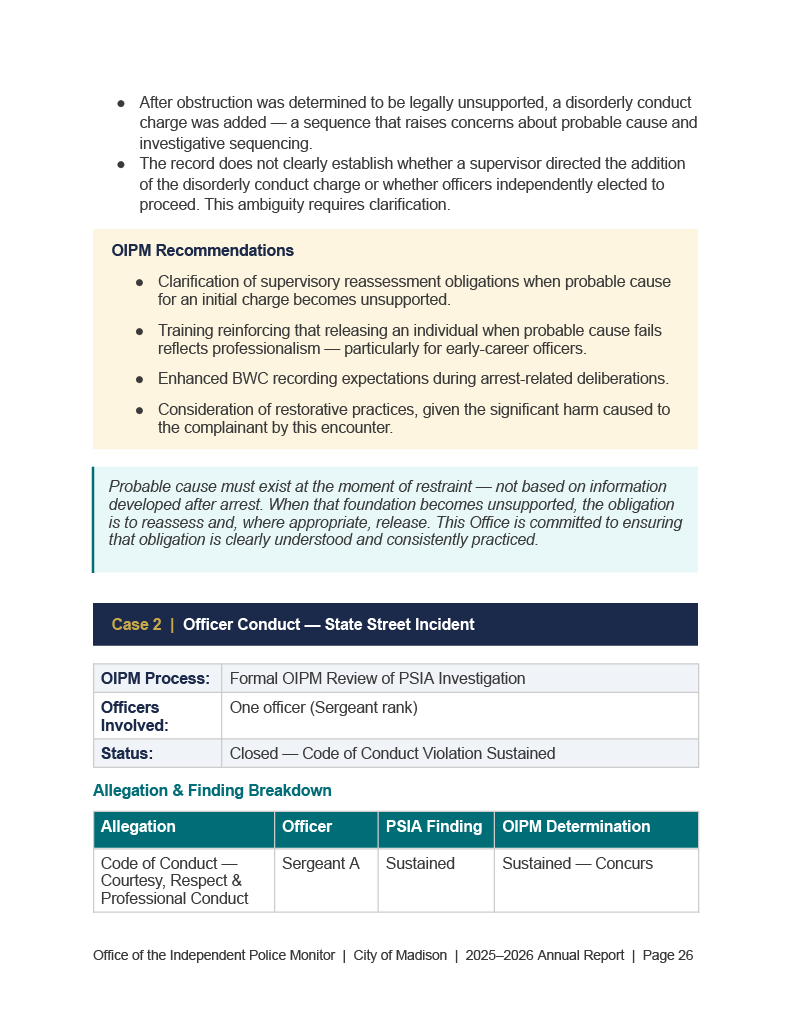
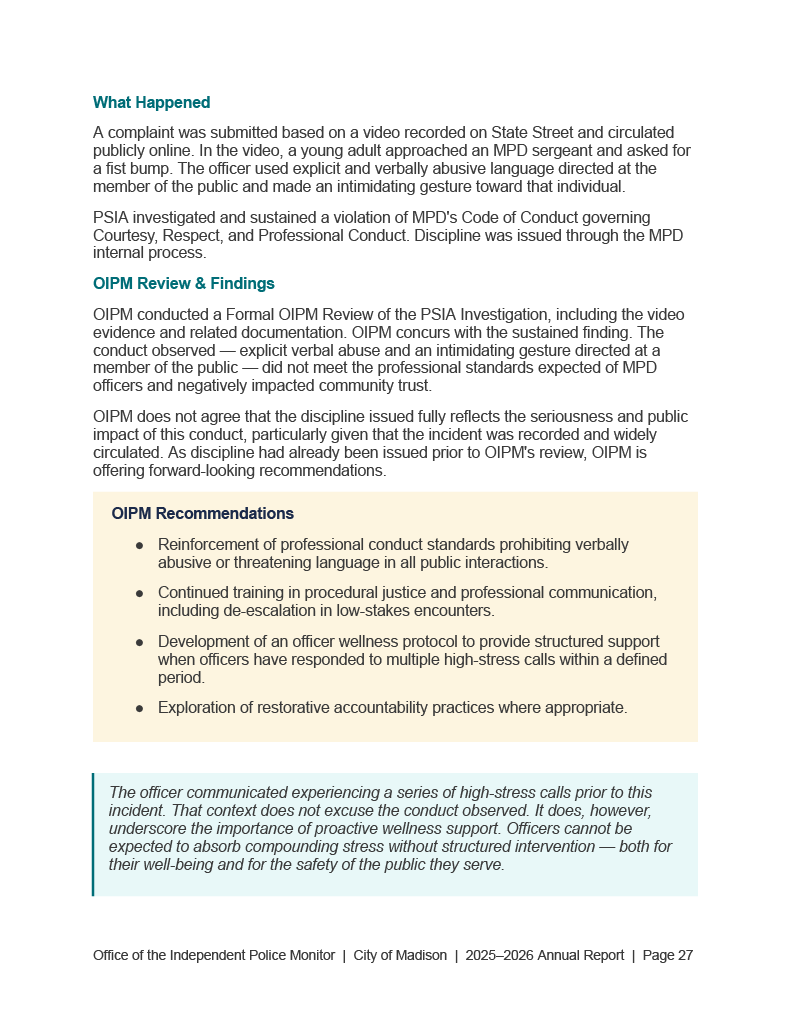
Closed Case Summaries
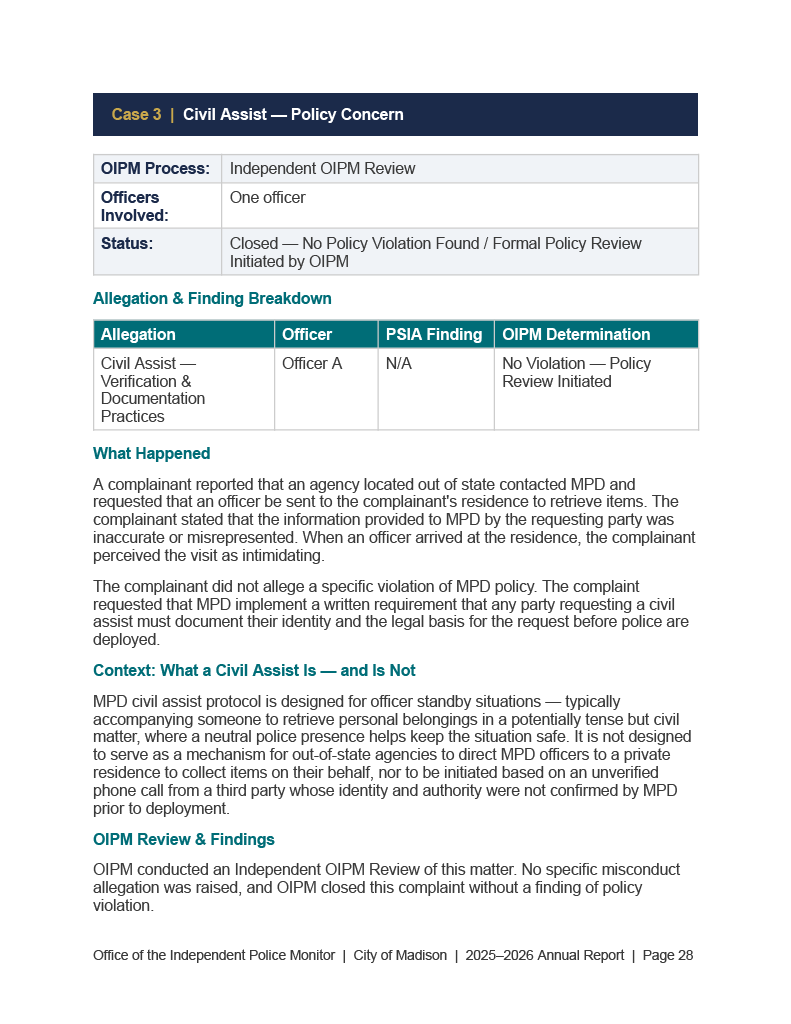
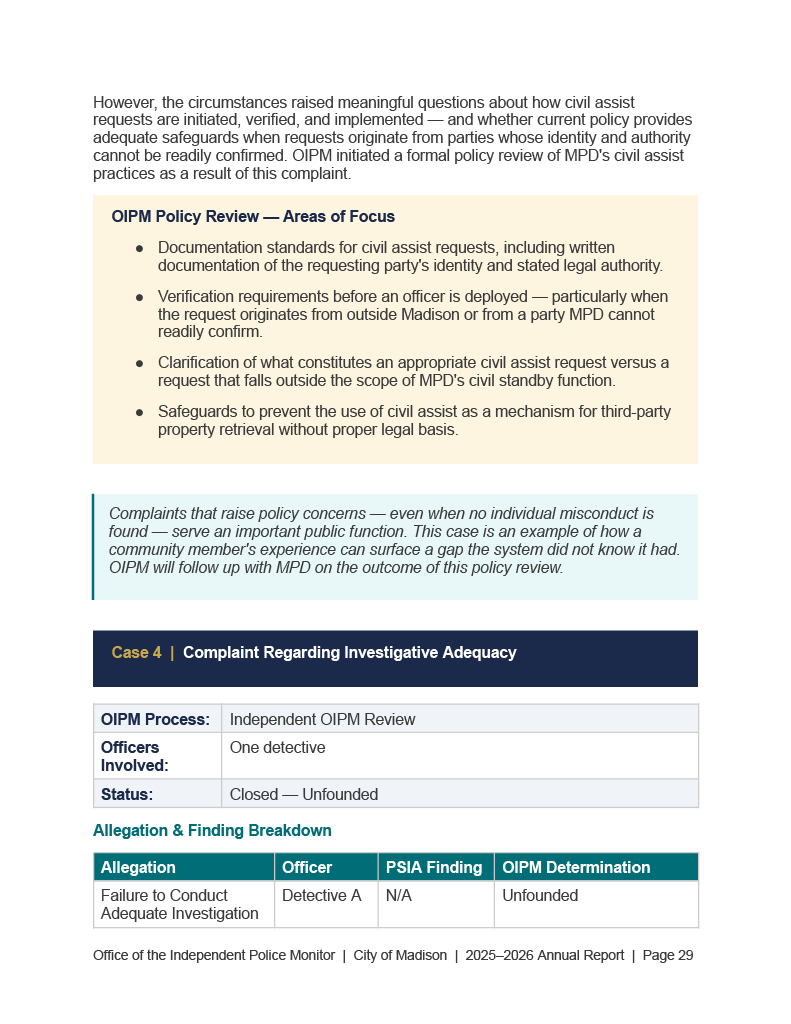
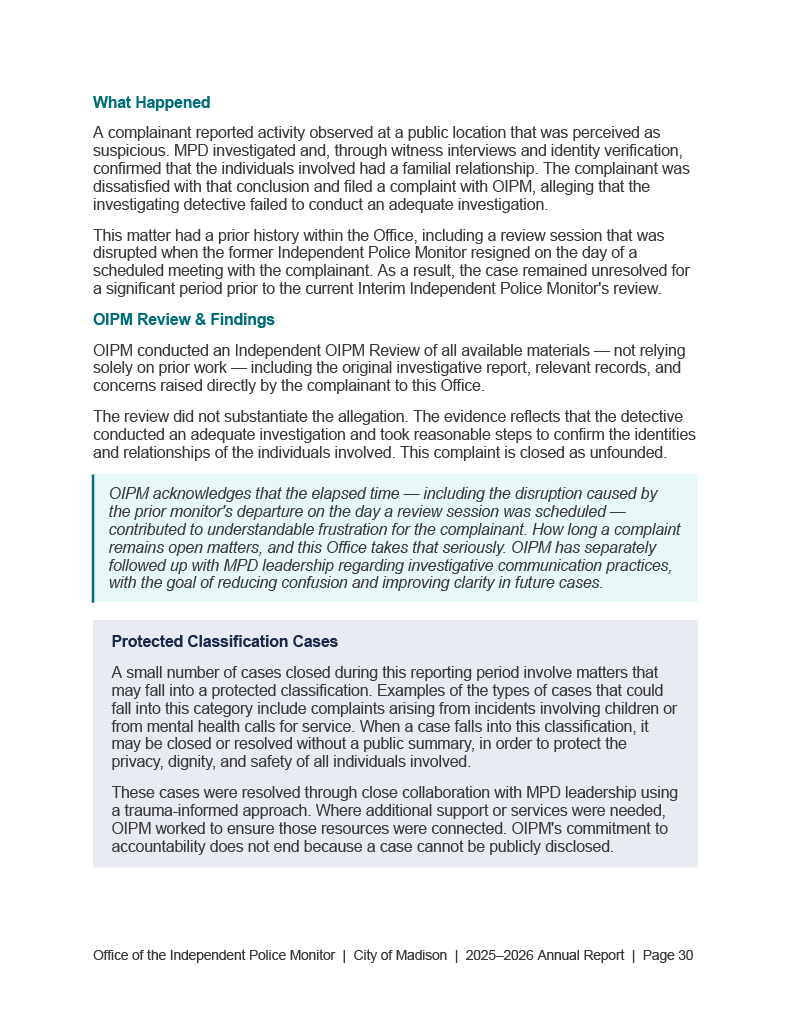
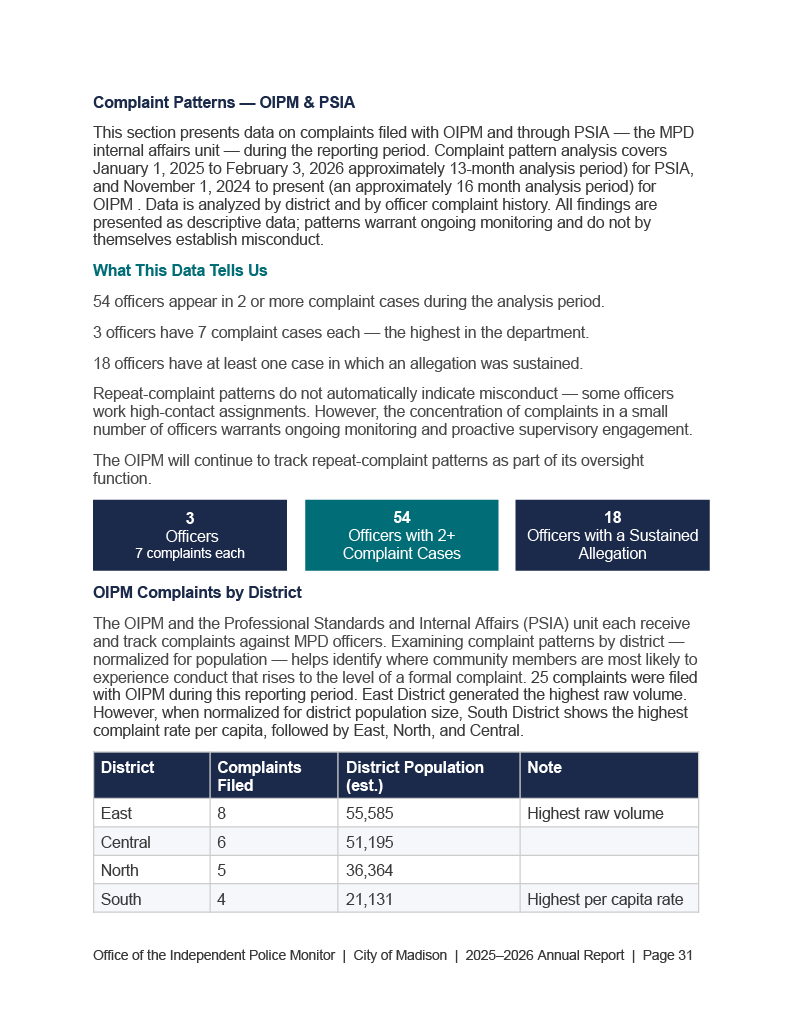
Complaint Patterns - OIPM & PSIA
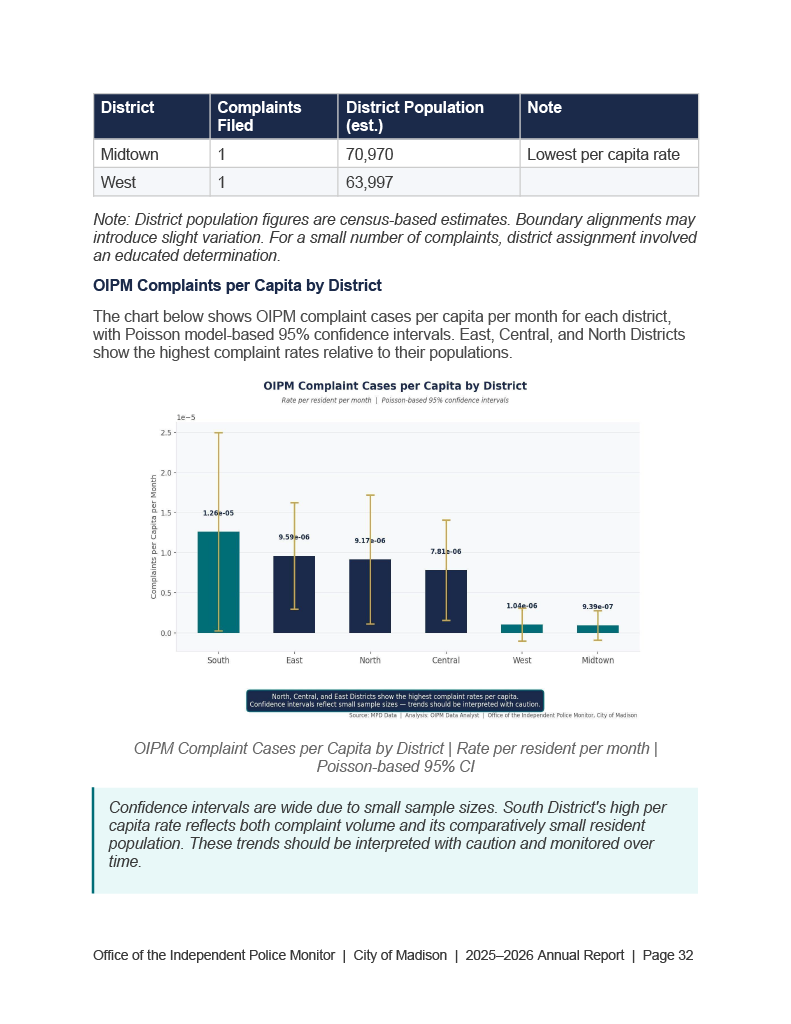
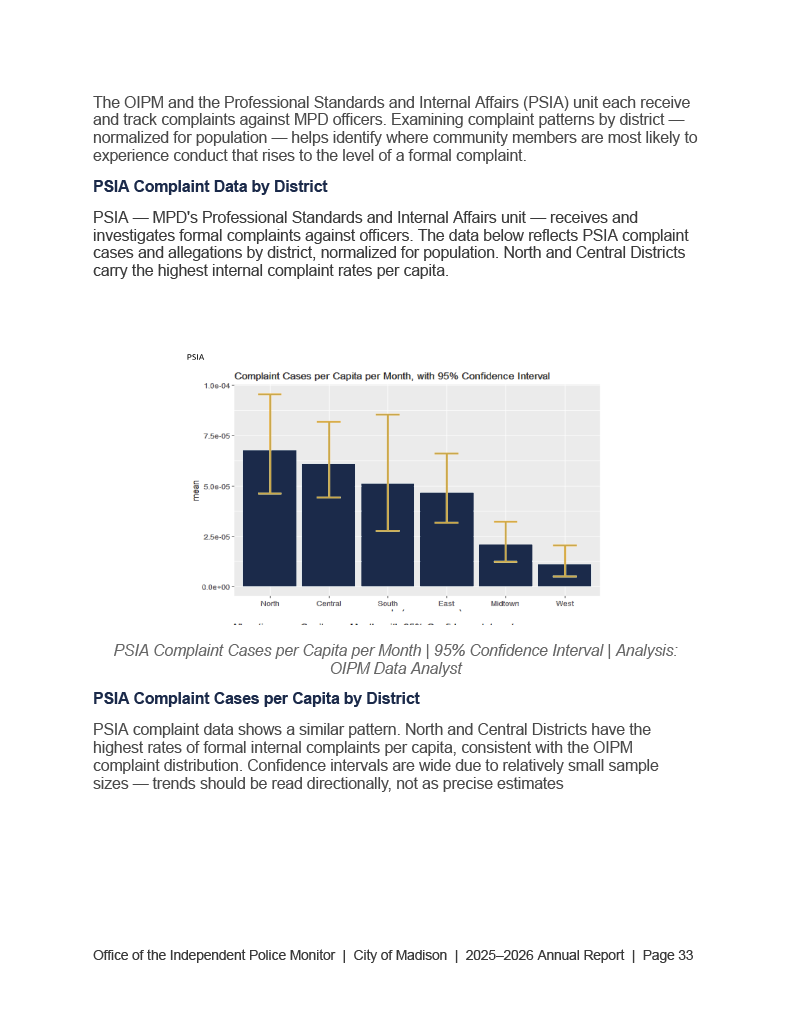
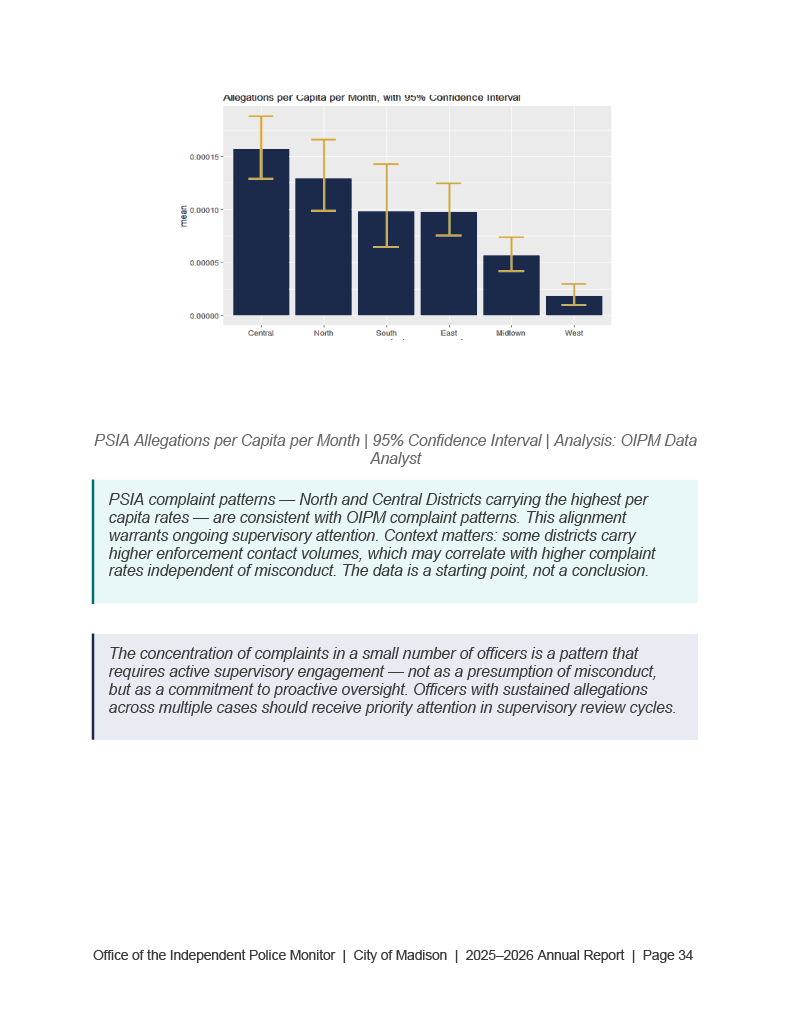
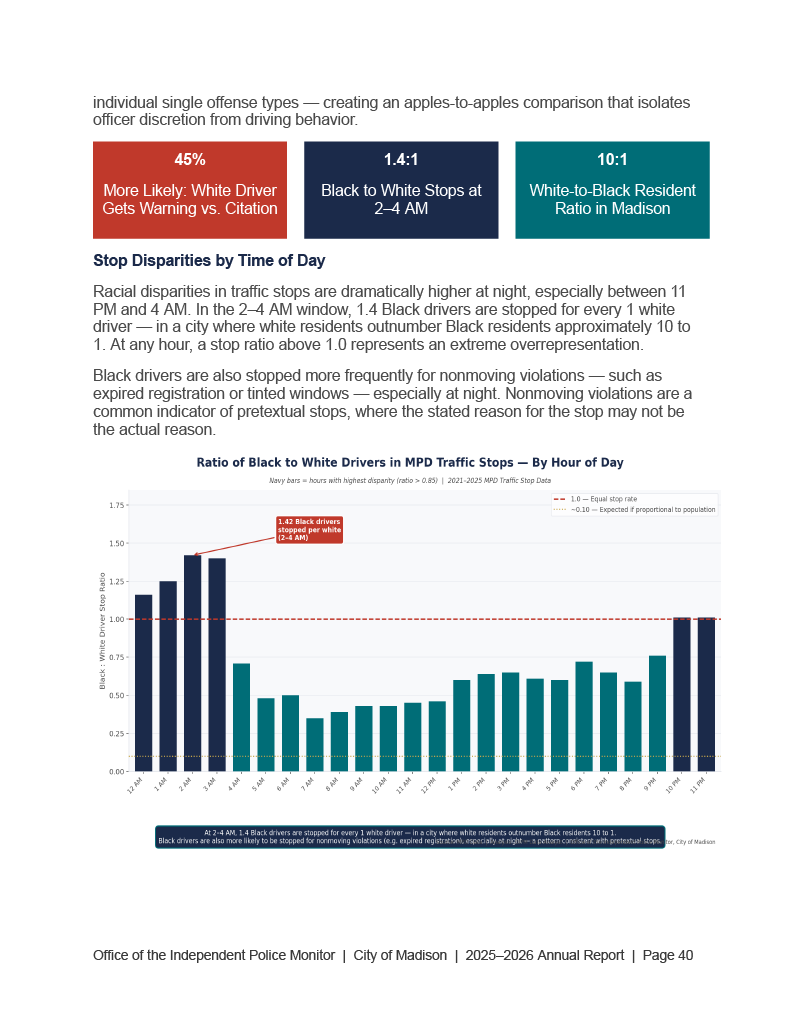
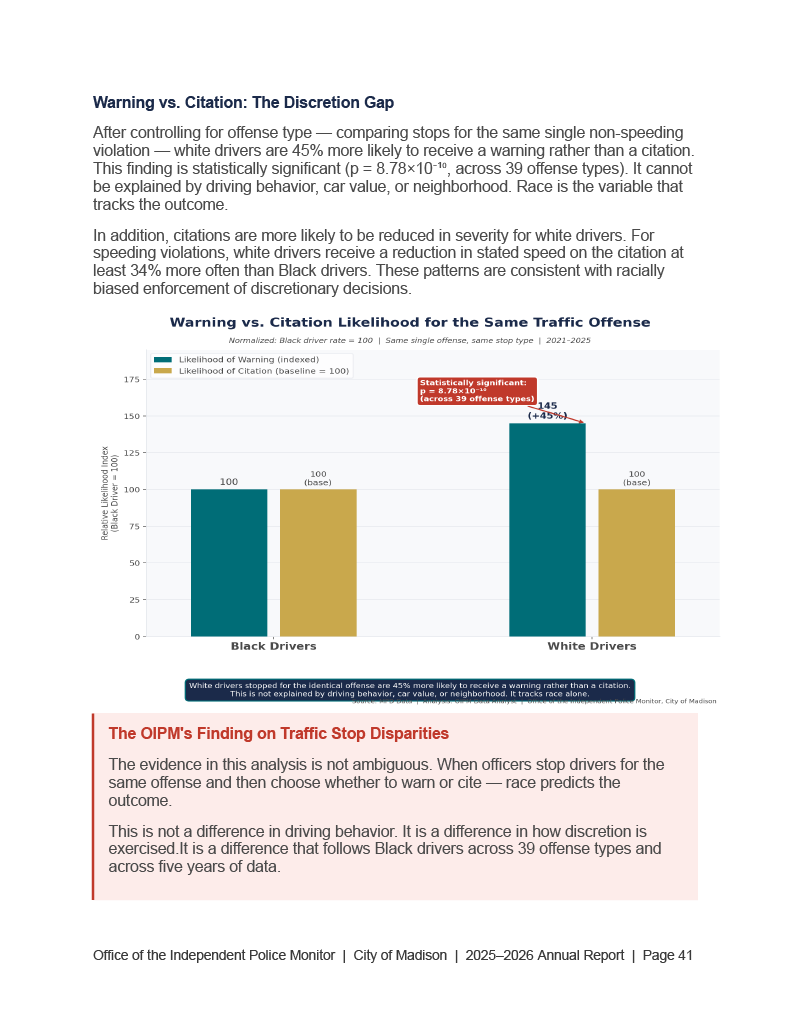
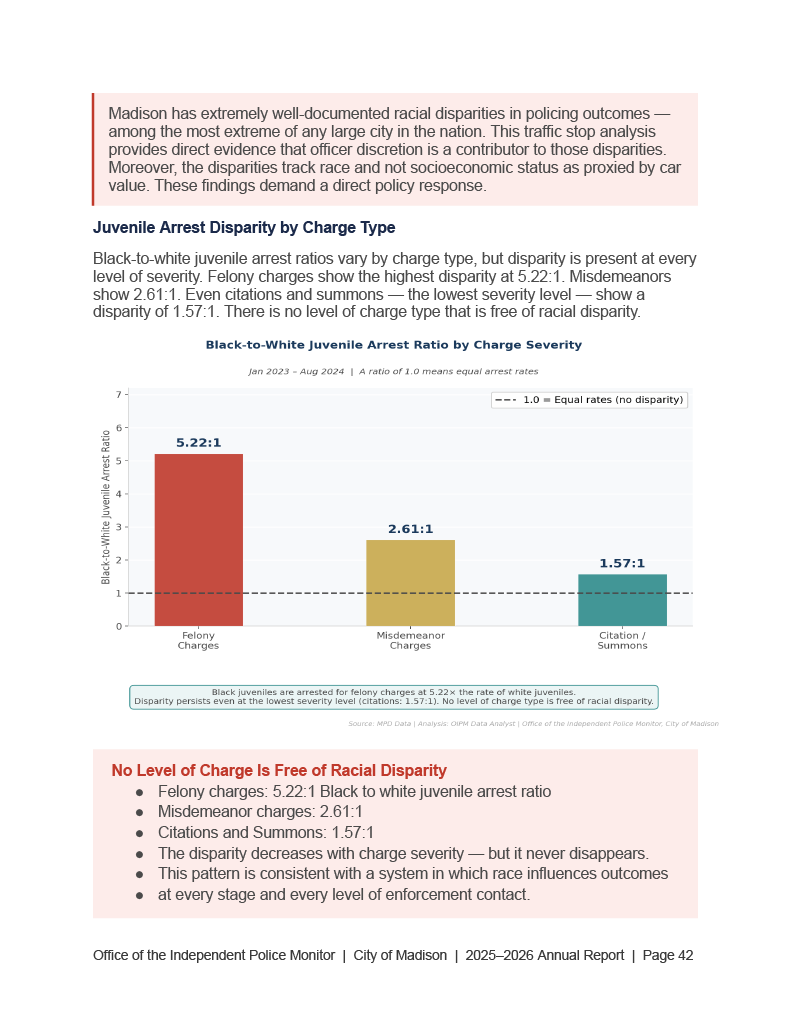
Data Analysis of MPD Policing Practices: Examining Arrest, Citation, and Traffic Stop Data to Understand Policing Patterns in Madison
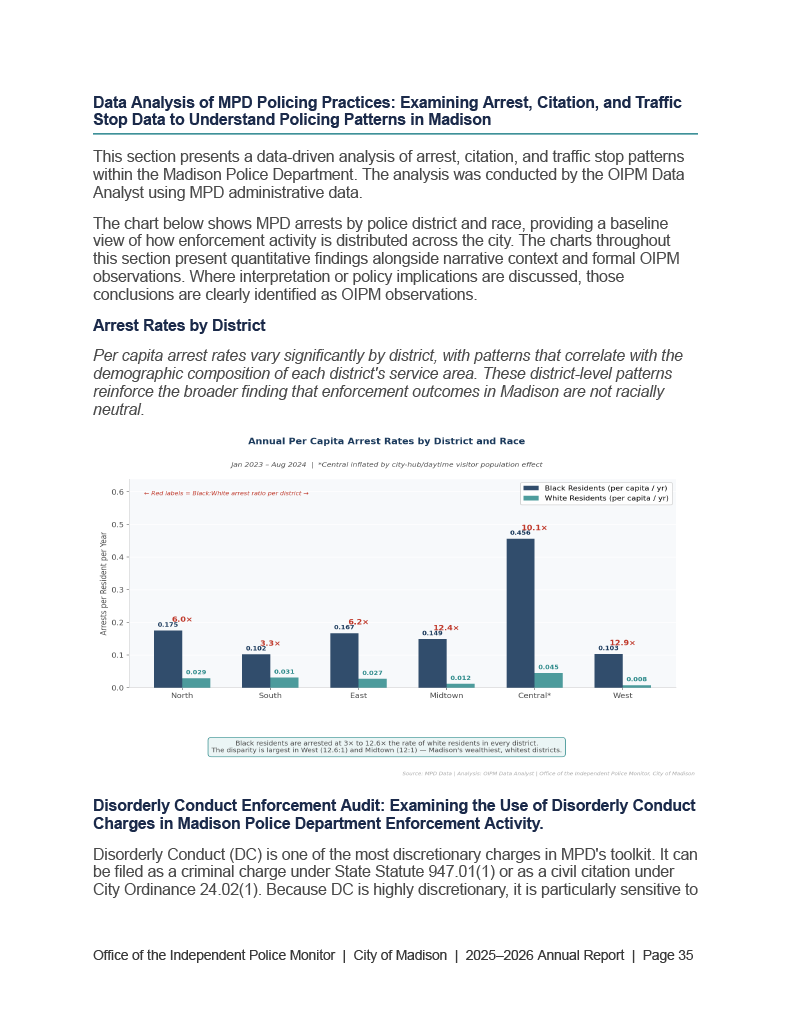
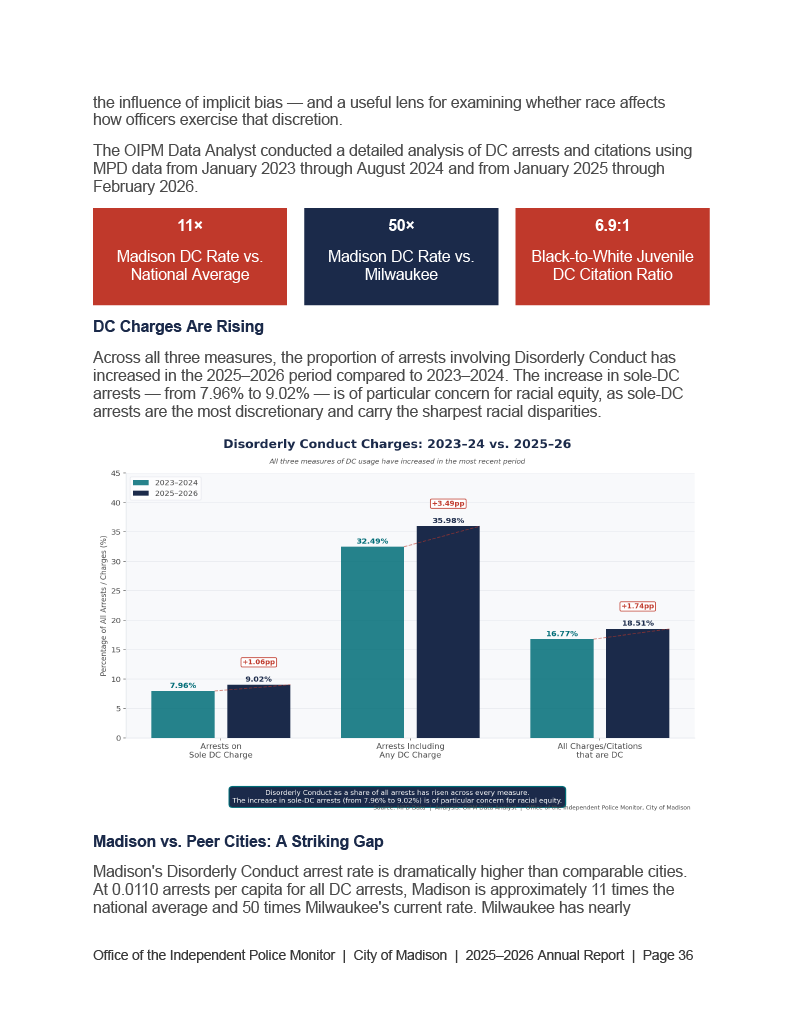
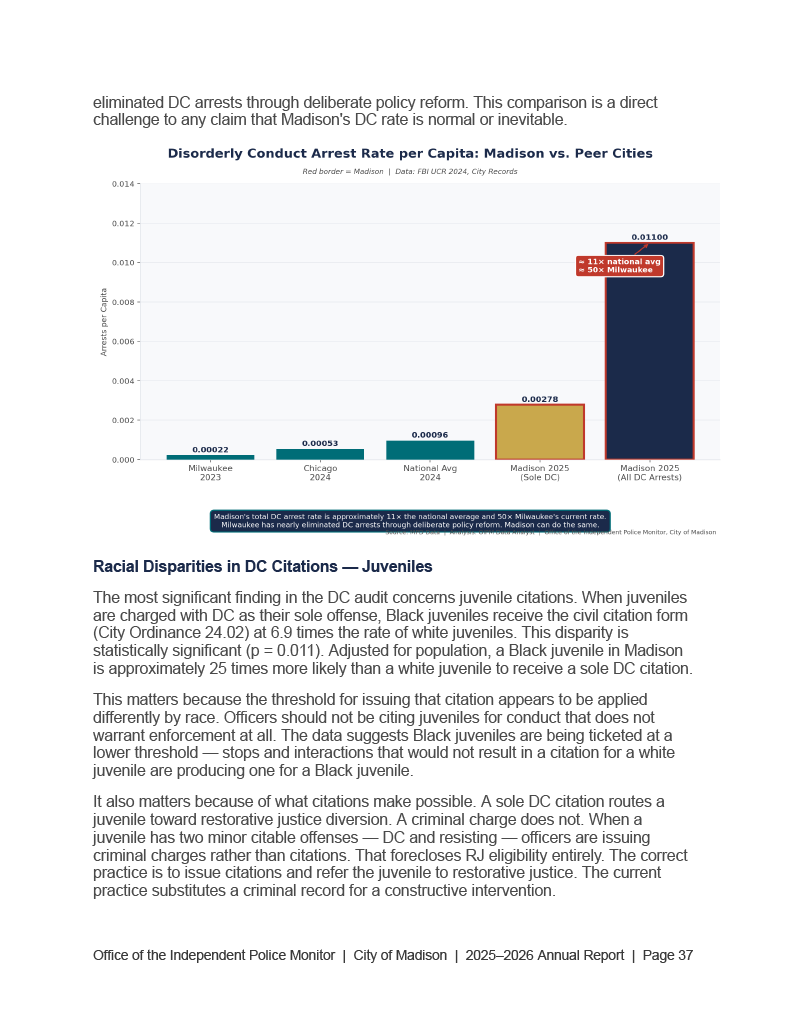
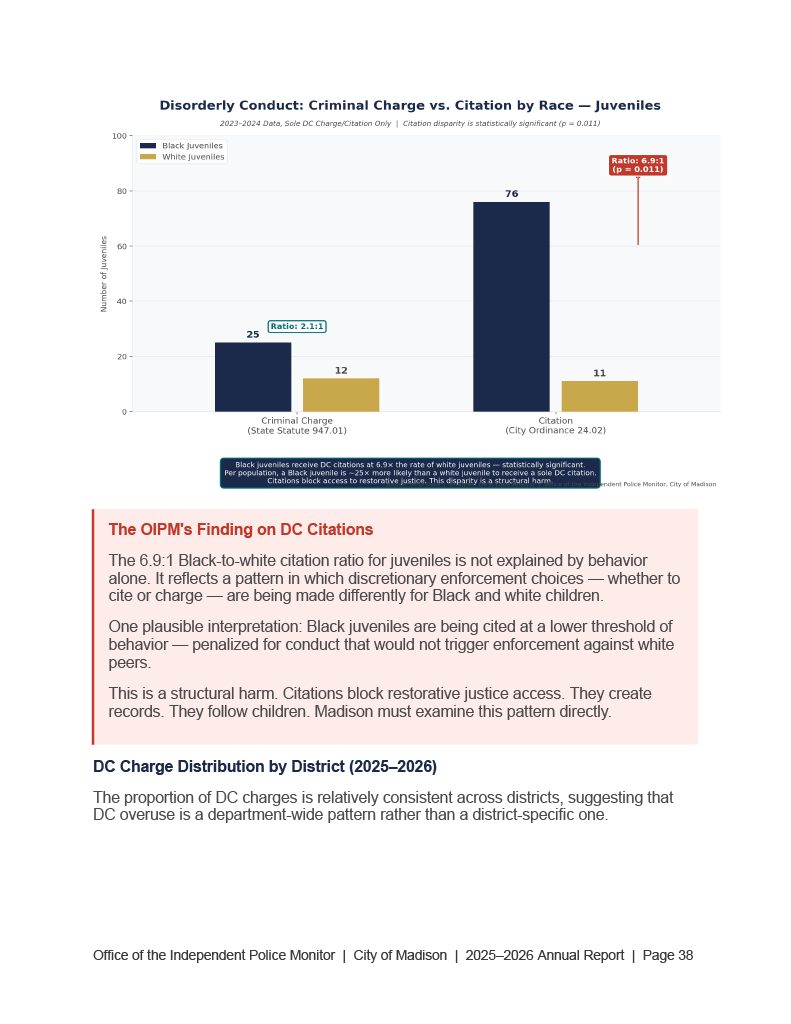
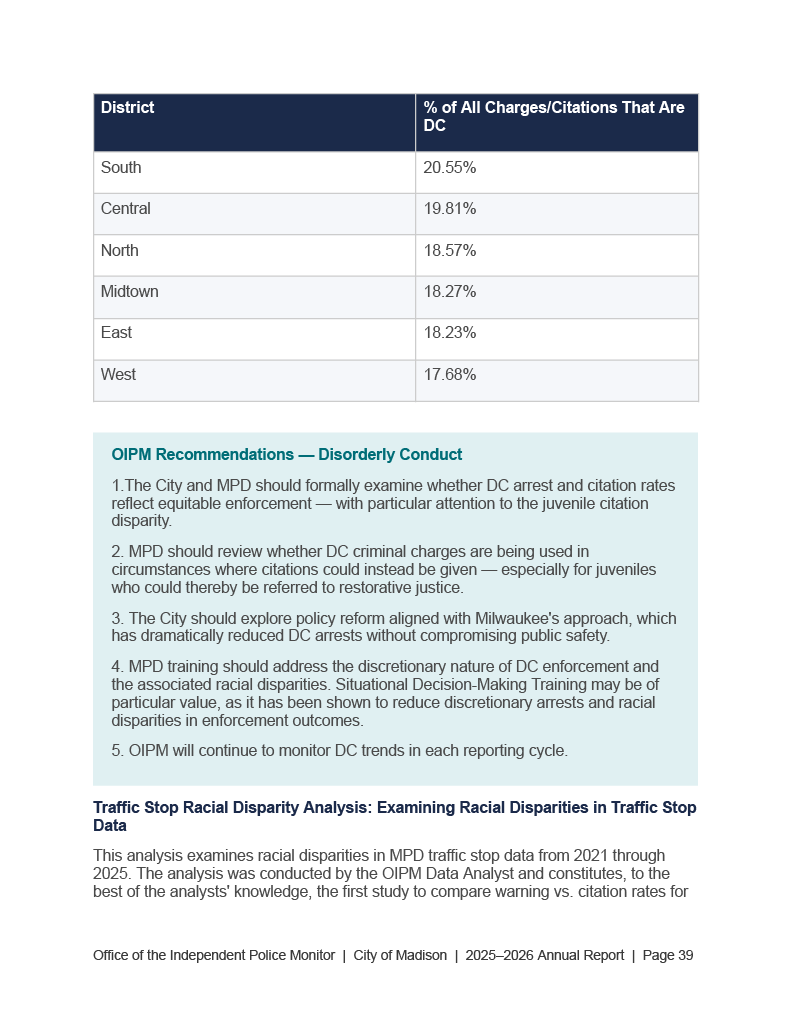
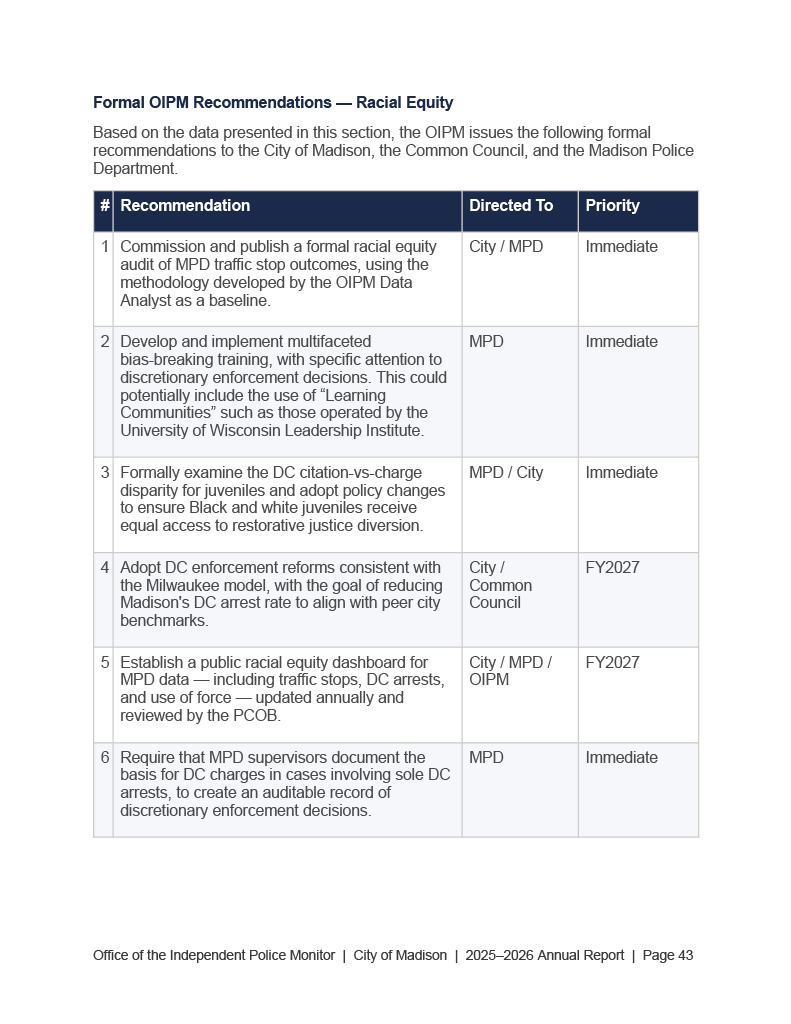
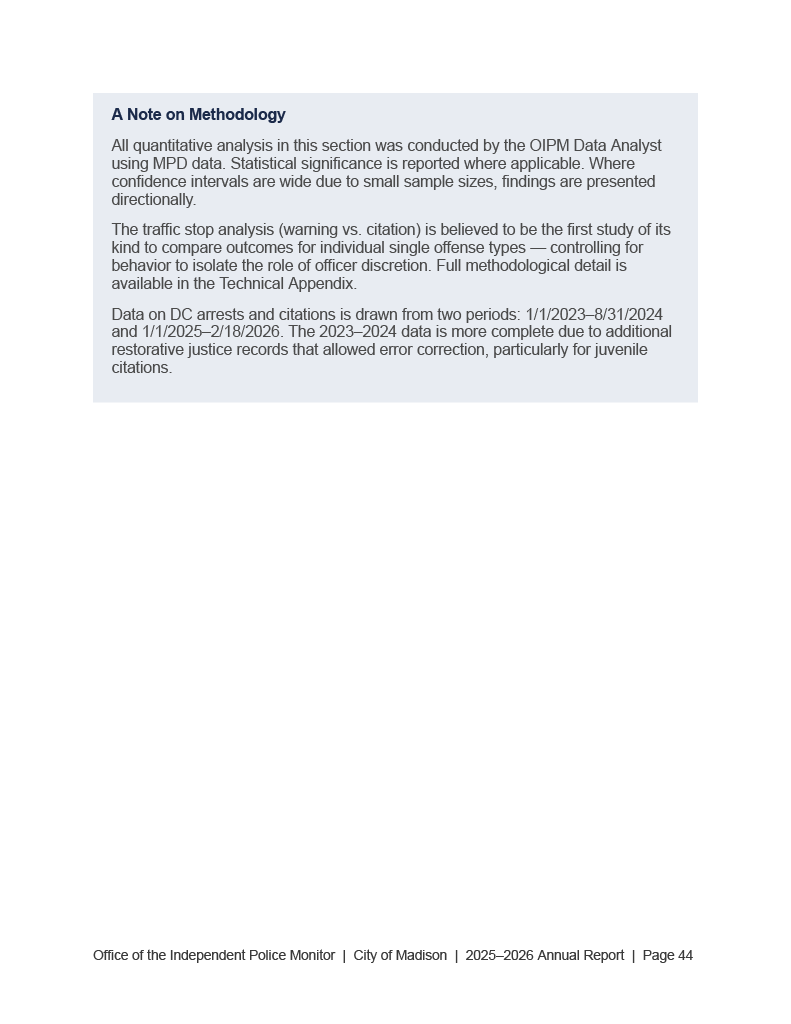
Formal OIPM Recommendations - Racial Equity & A Note on Methodology
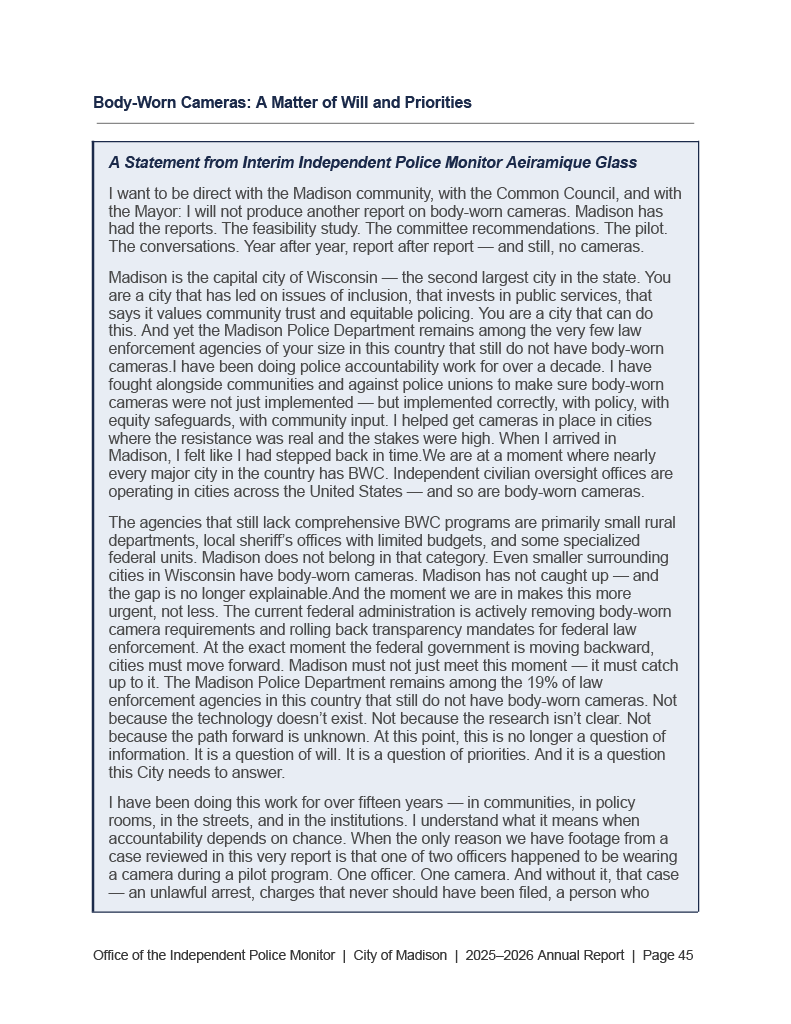
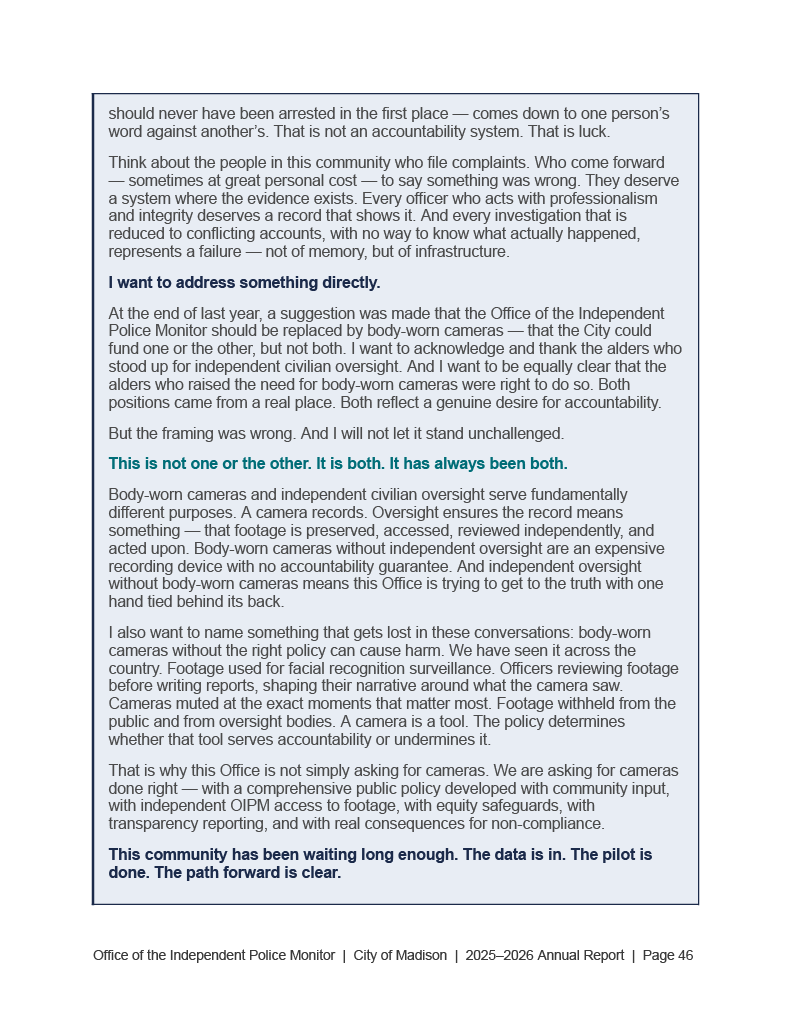
A Statement from Interim Independent Police Monitor Aeiramique Glass
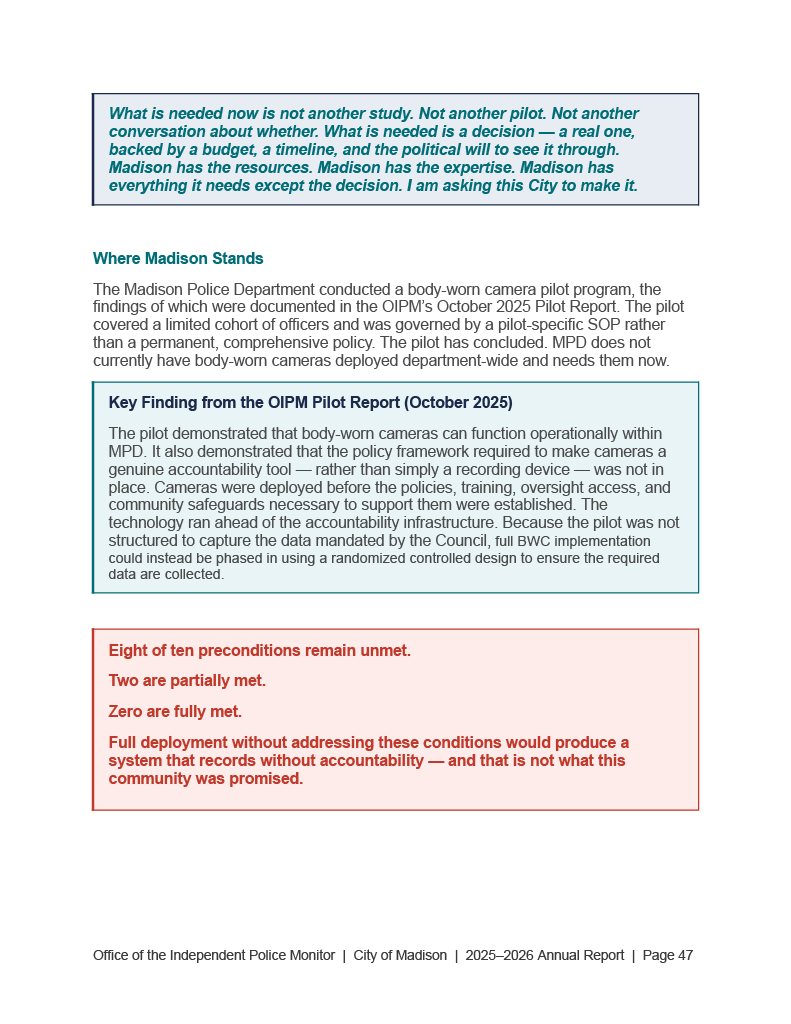
Policy, Practices & Systems Assessment
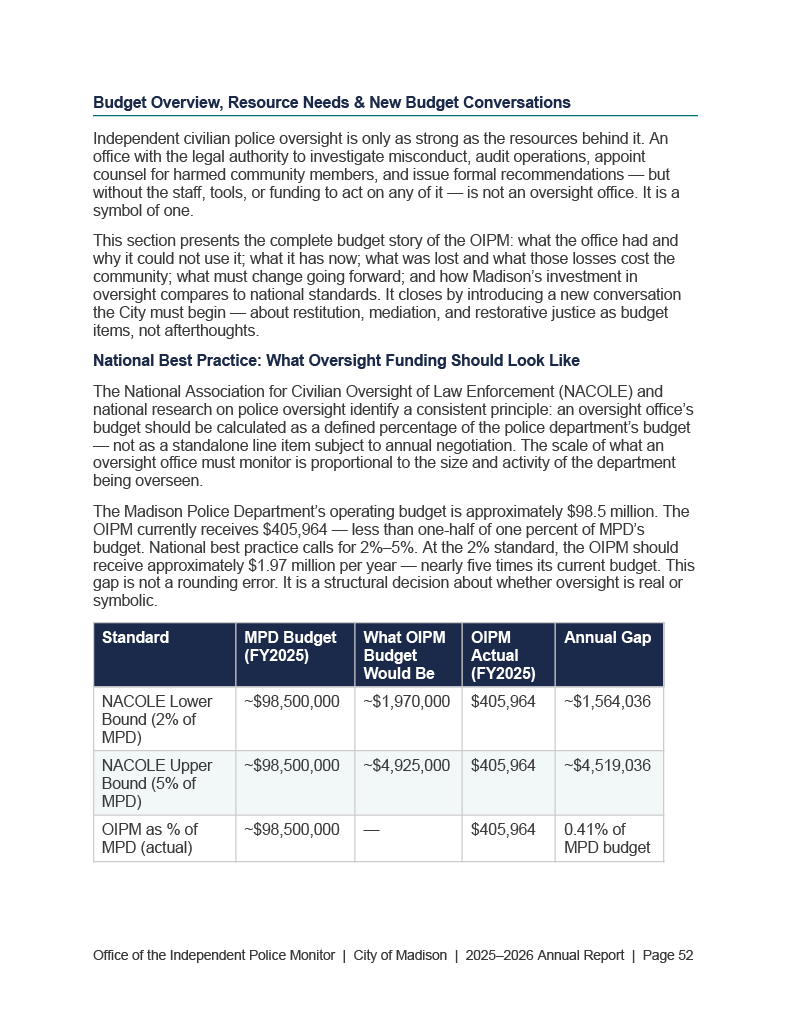
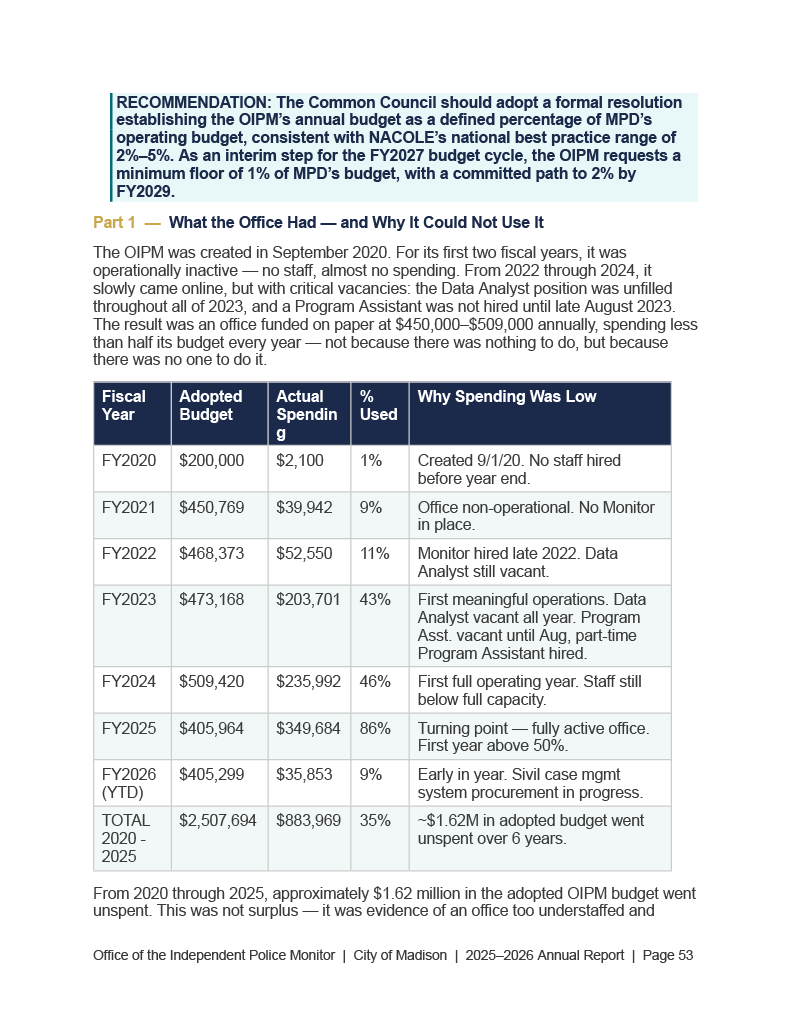
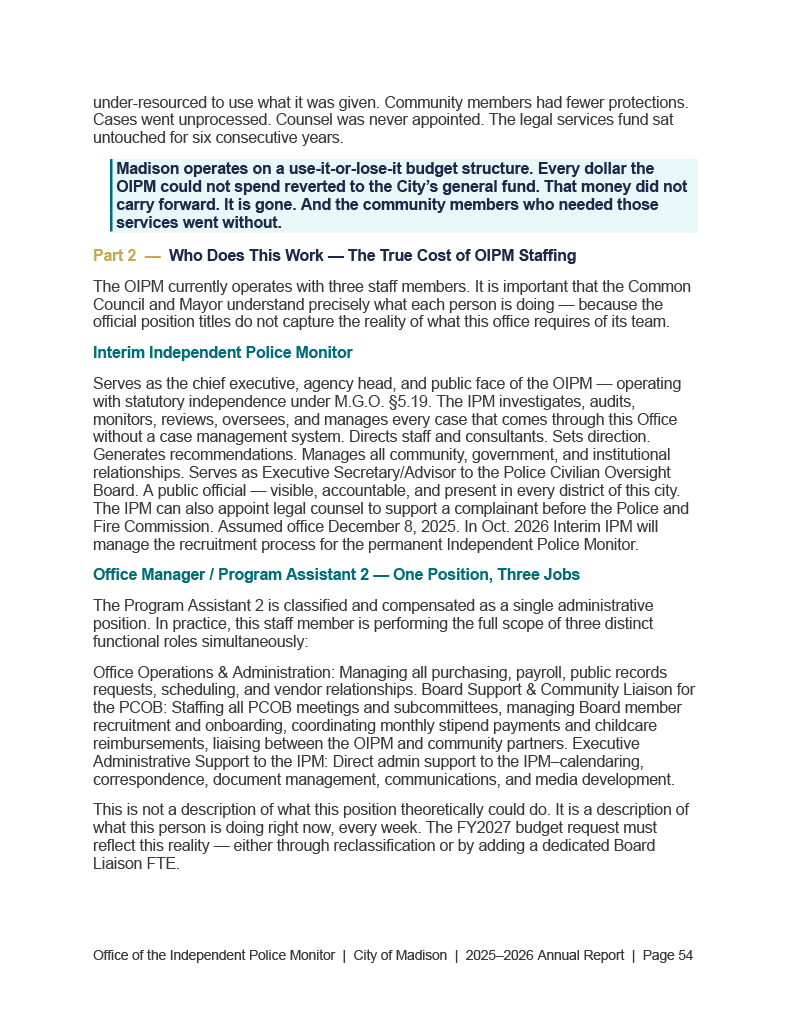
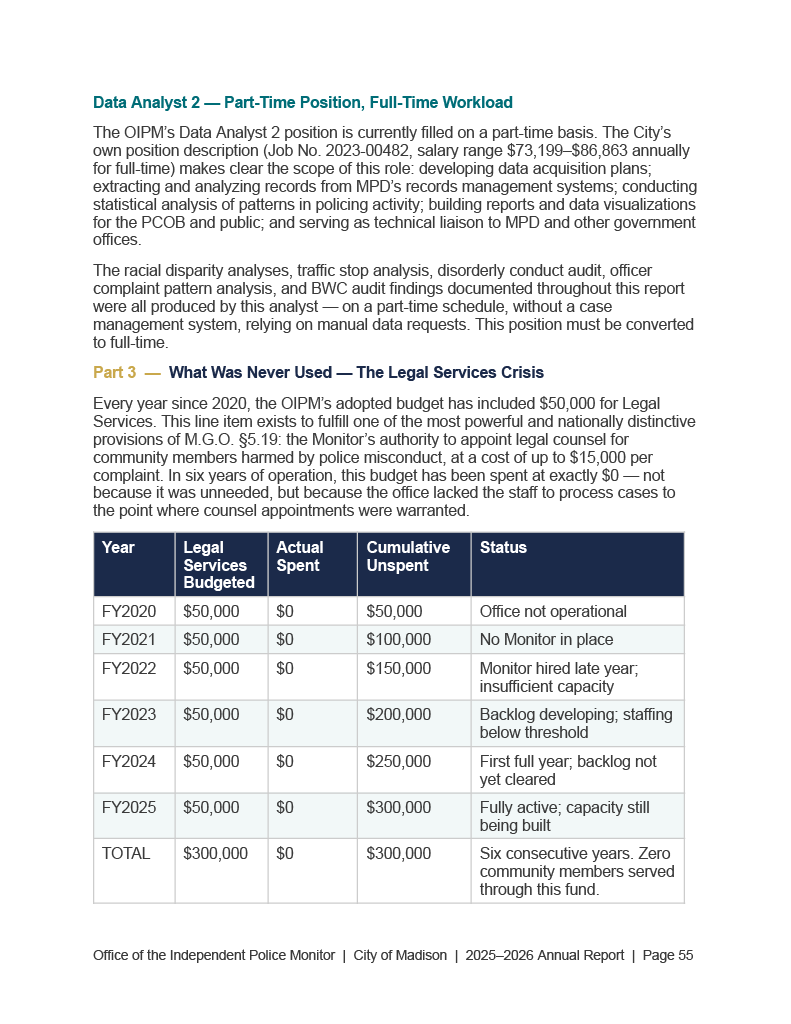
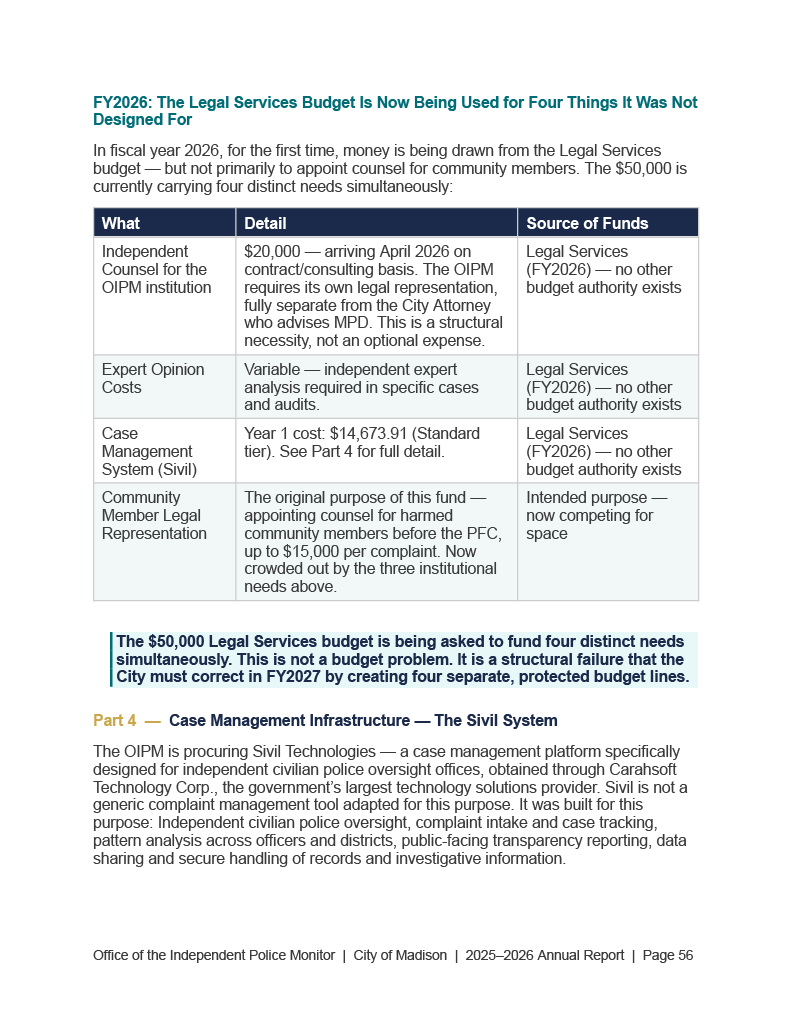
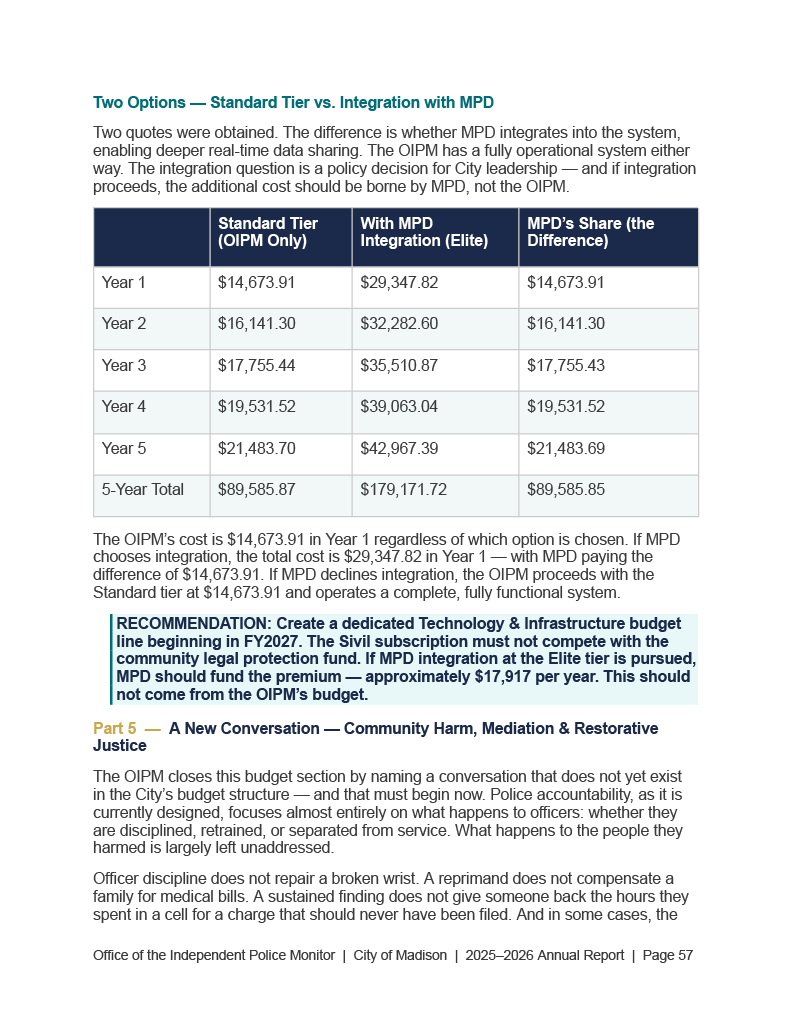
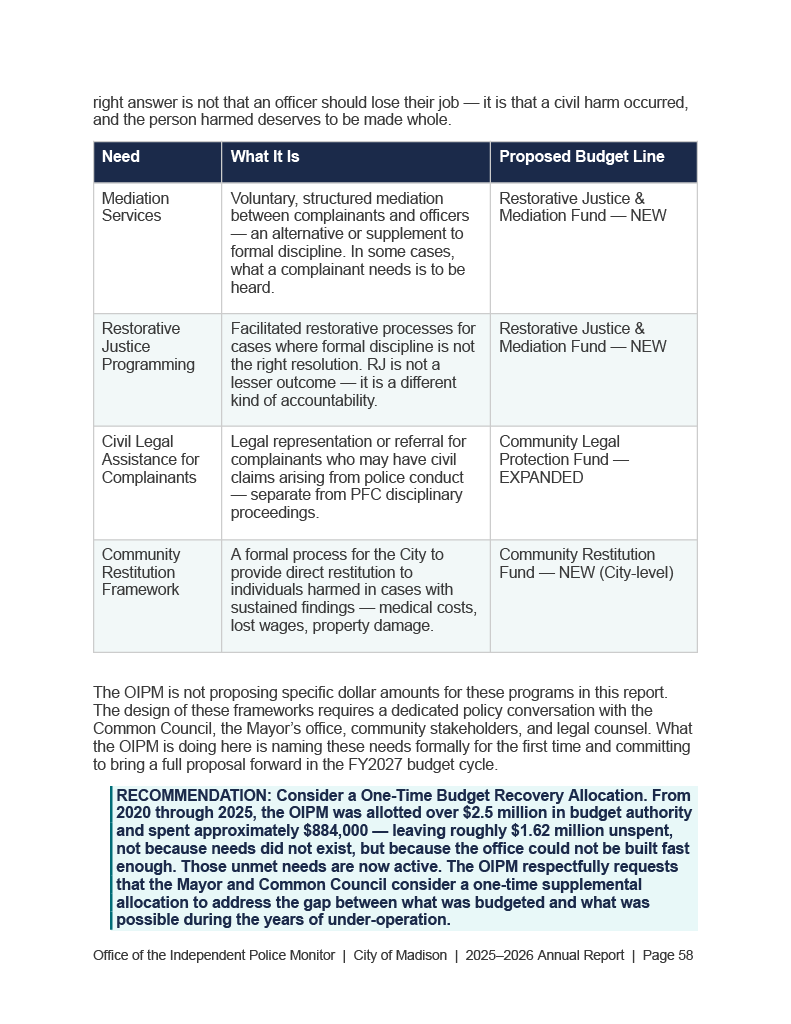
Budget Overview, Resources Needs & New Budget Conversations
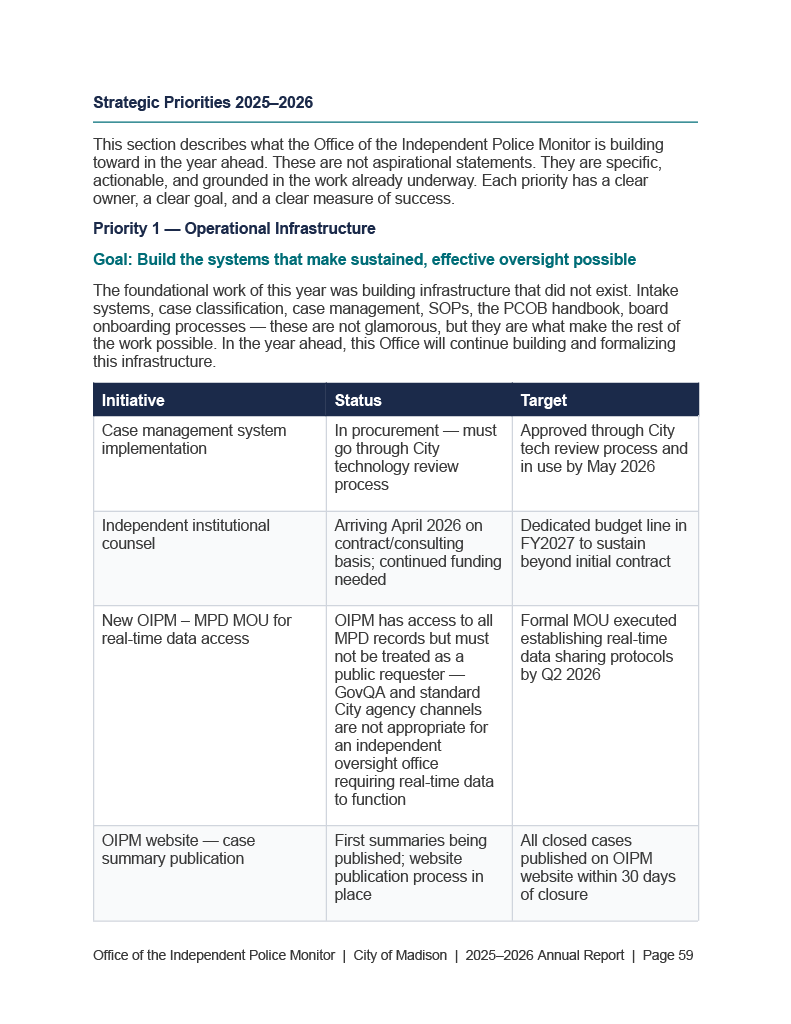
Strategic Priorities 2025-2026
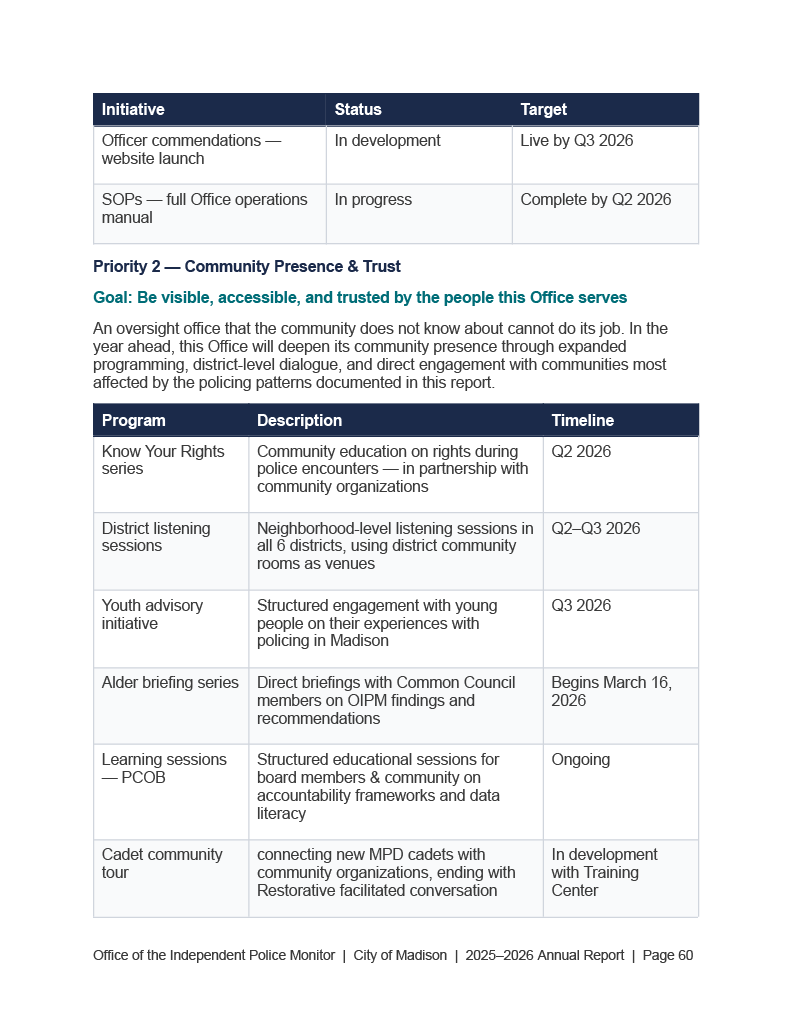
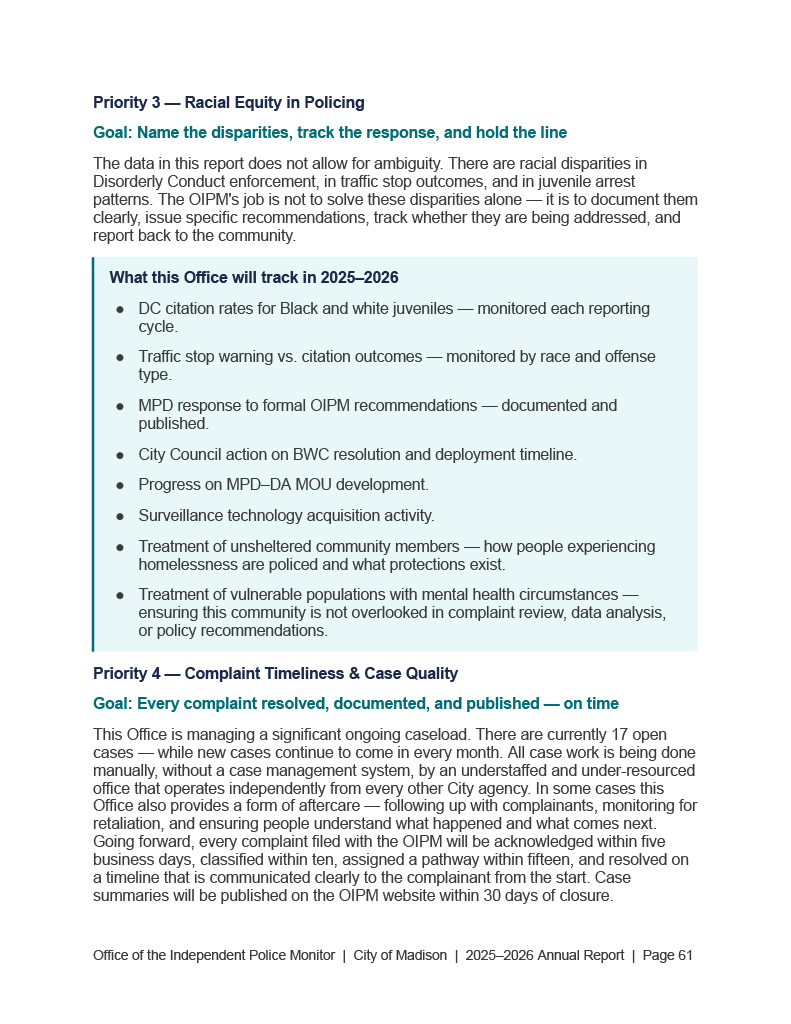
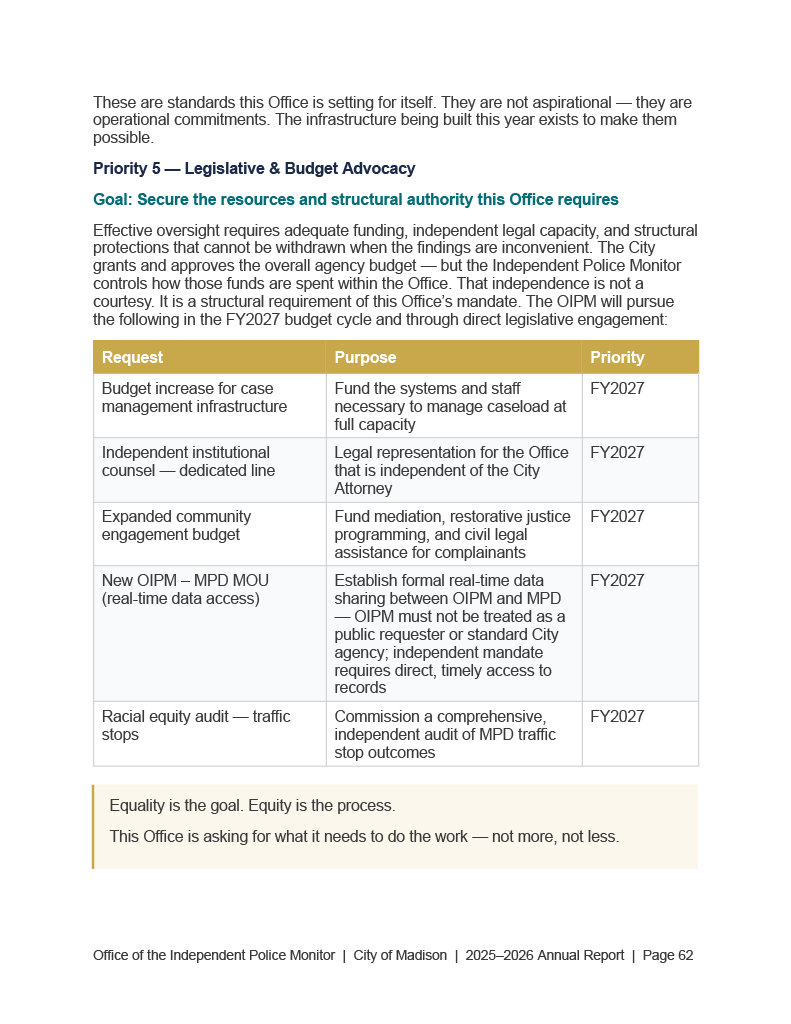
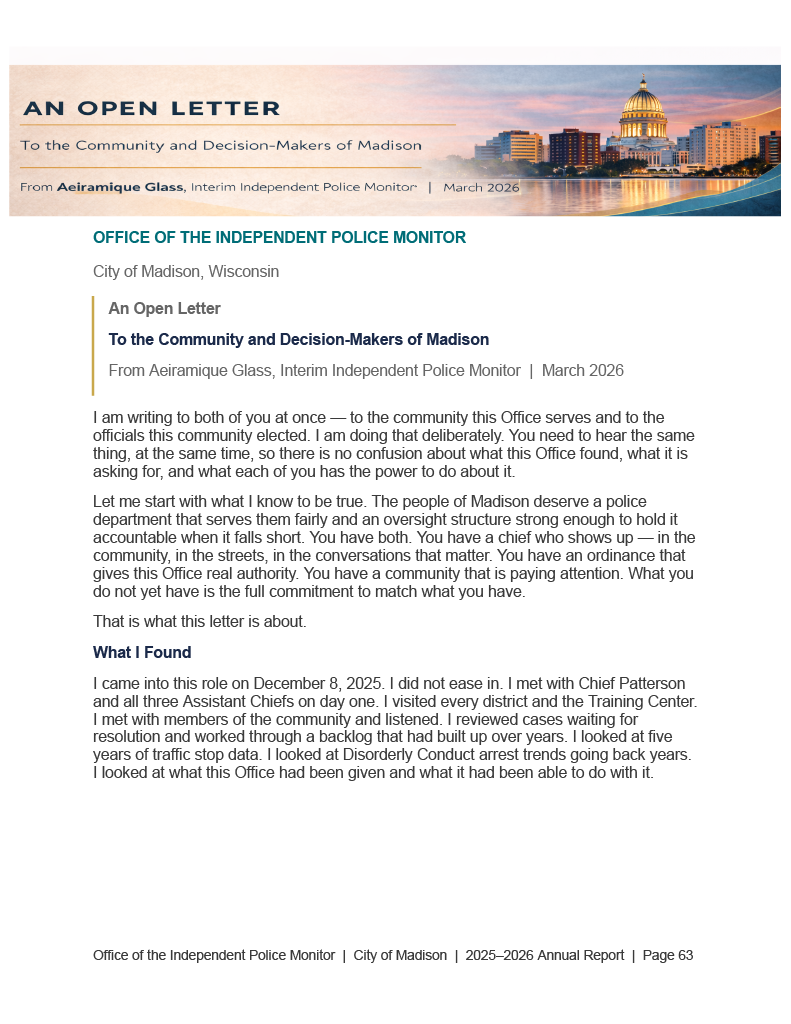
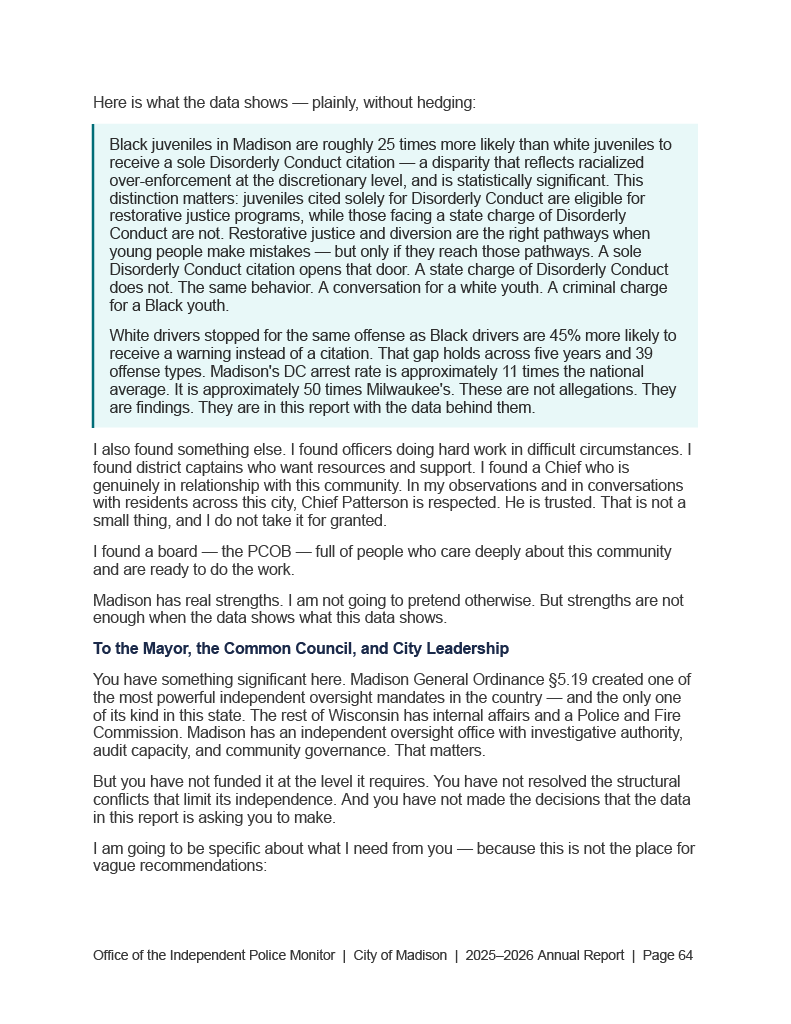
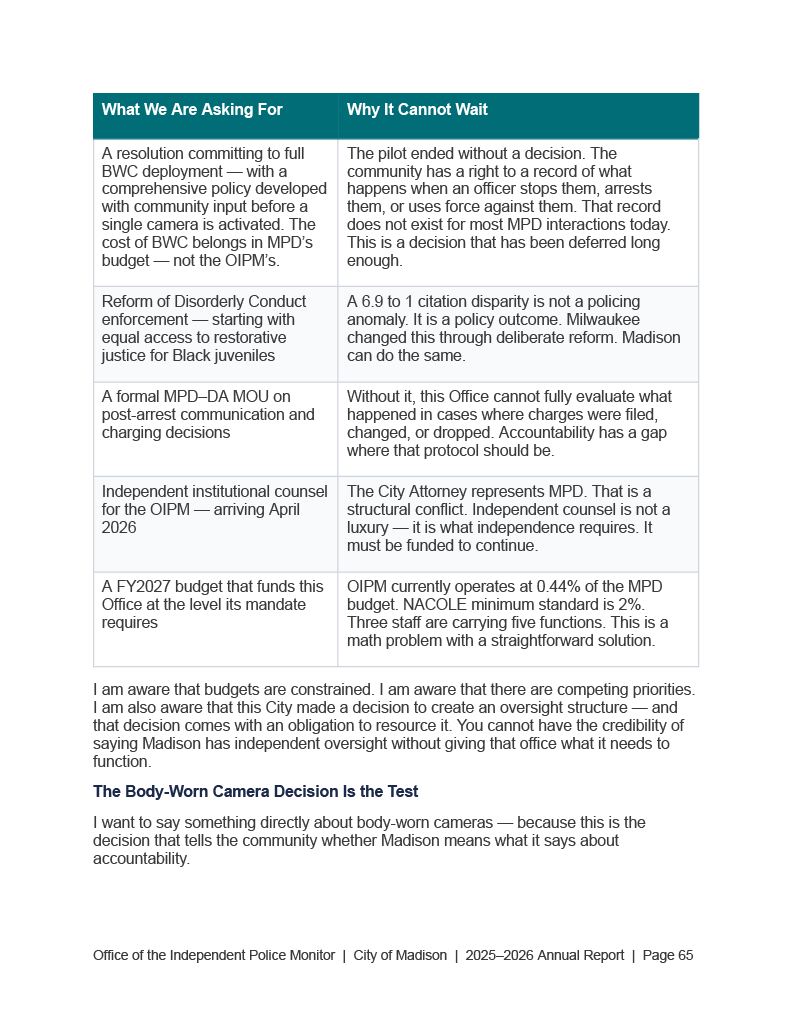
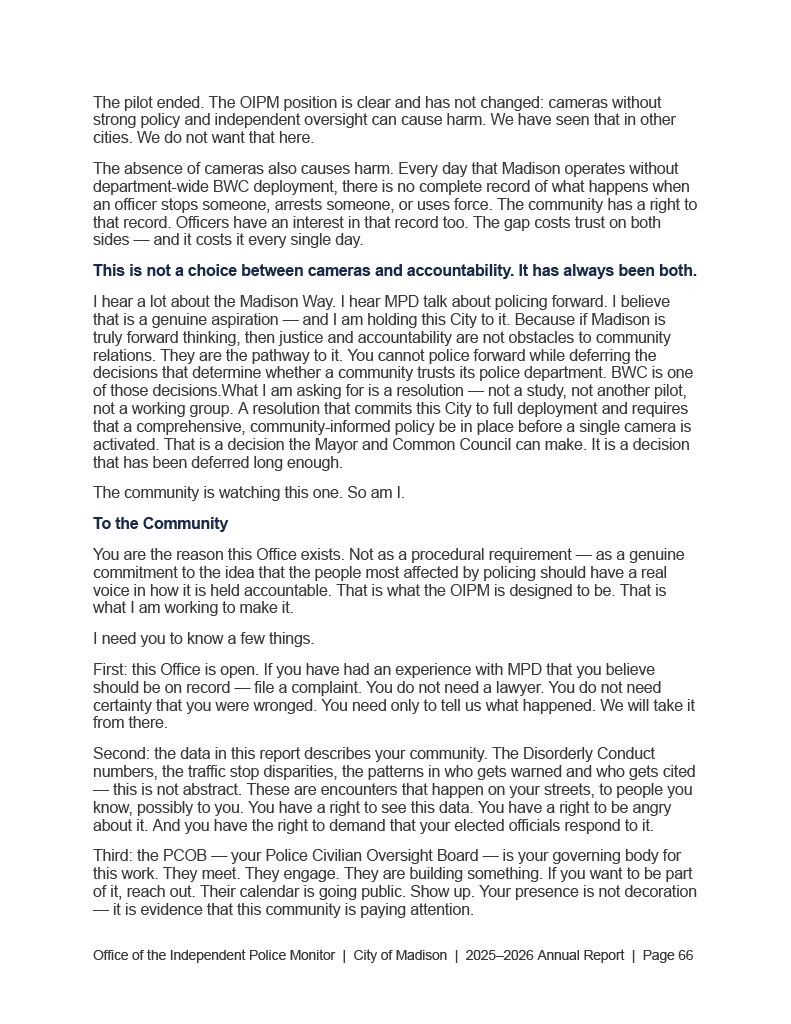
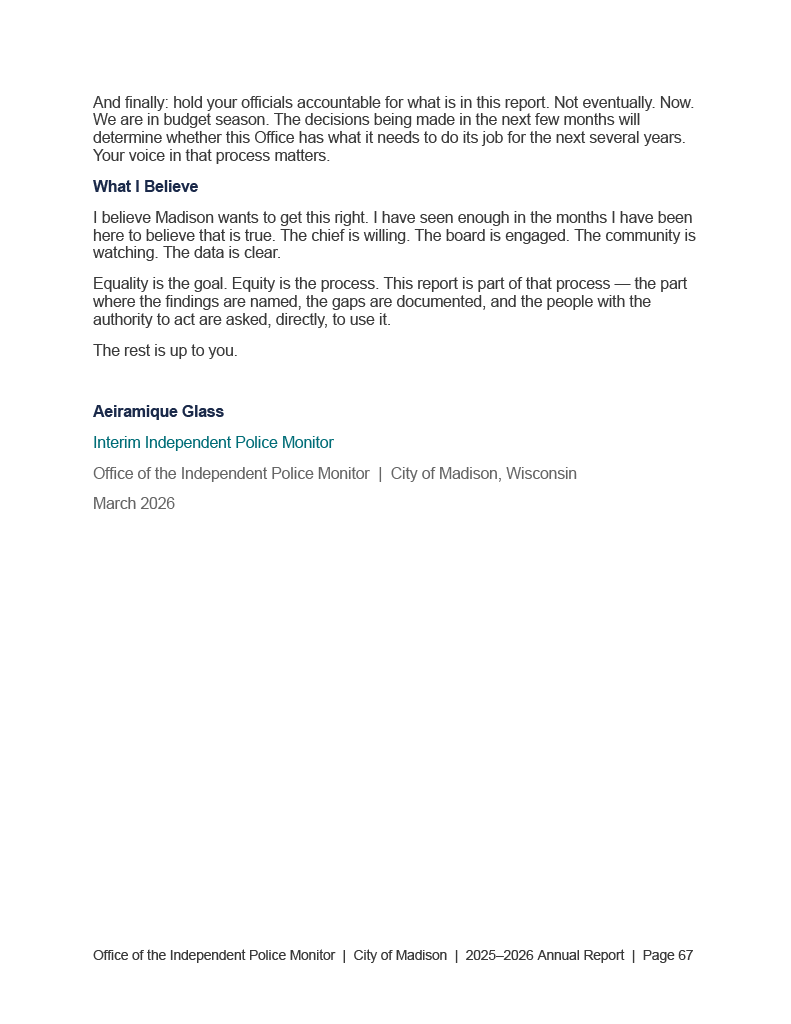
An Open Letter To the Community and Decision-Makers of Madison ⎪From Aeiramique Glass ⎪Interim Independent Police Monitor ⎪March 2026
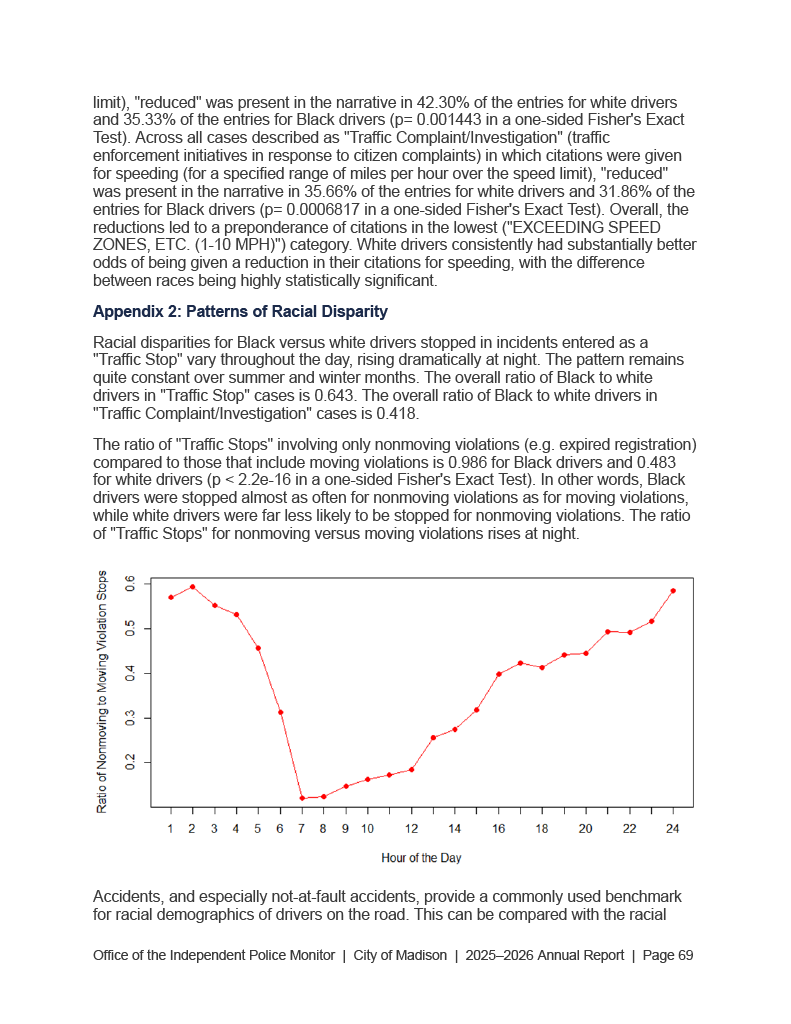
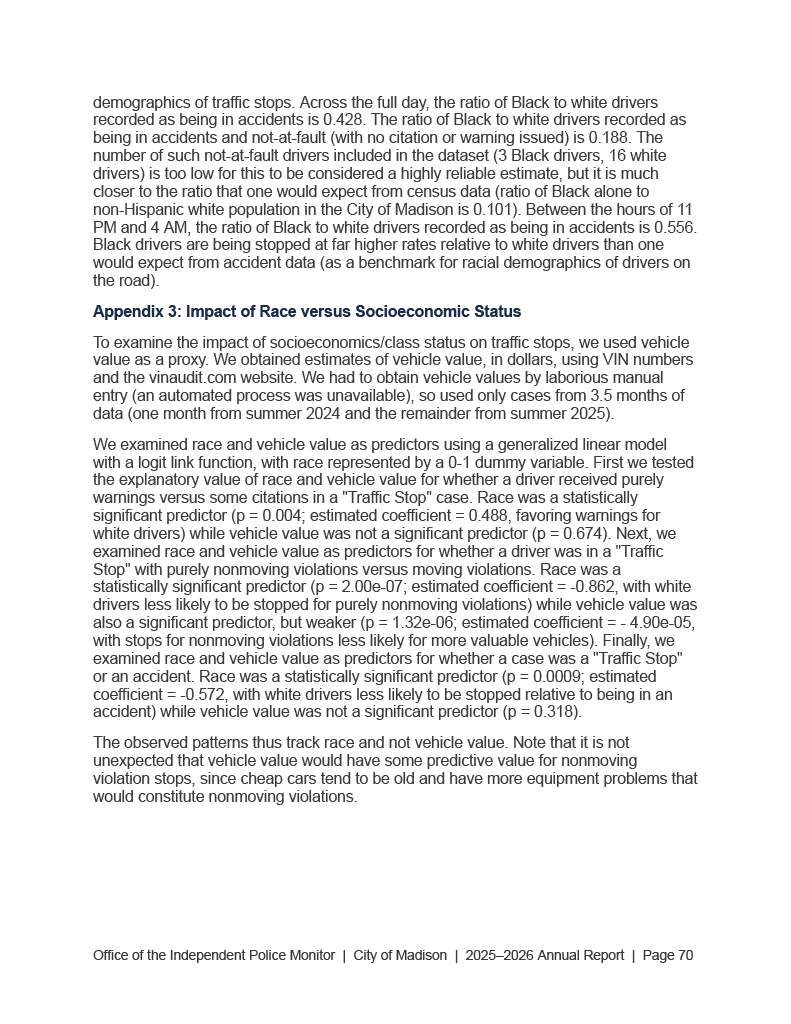
Technical Appendices - Racial Disparities in Traffic Stops
Made it this far? Good.
There is a real problem with racial disparities in arrests, charges, and convictions in Dane County. Solving it cannot stop at addressing outcomes after they occur. It requires confronting the socioeconomic conditions that create those outcomes in the first place.
Calling out inequity does not excuse a lack of accountability. The standard applies to everyone.